Posted on December 3, 2025
Post categories: Architecture Featured News Stories from the Studio Students

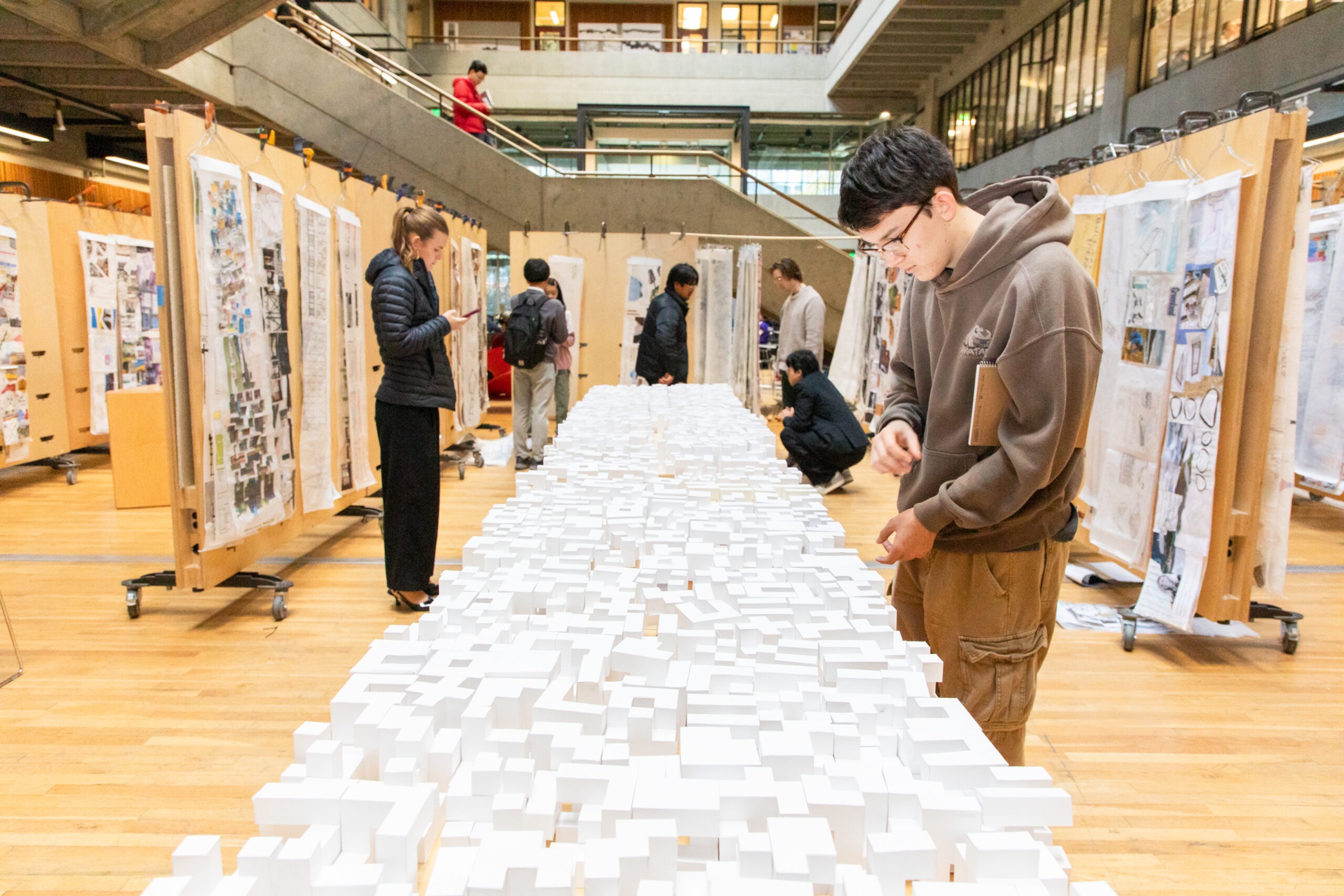
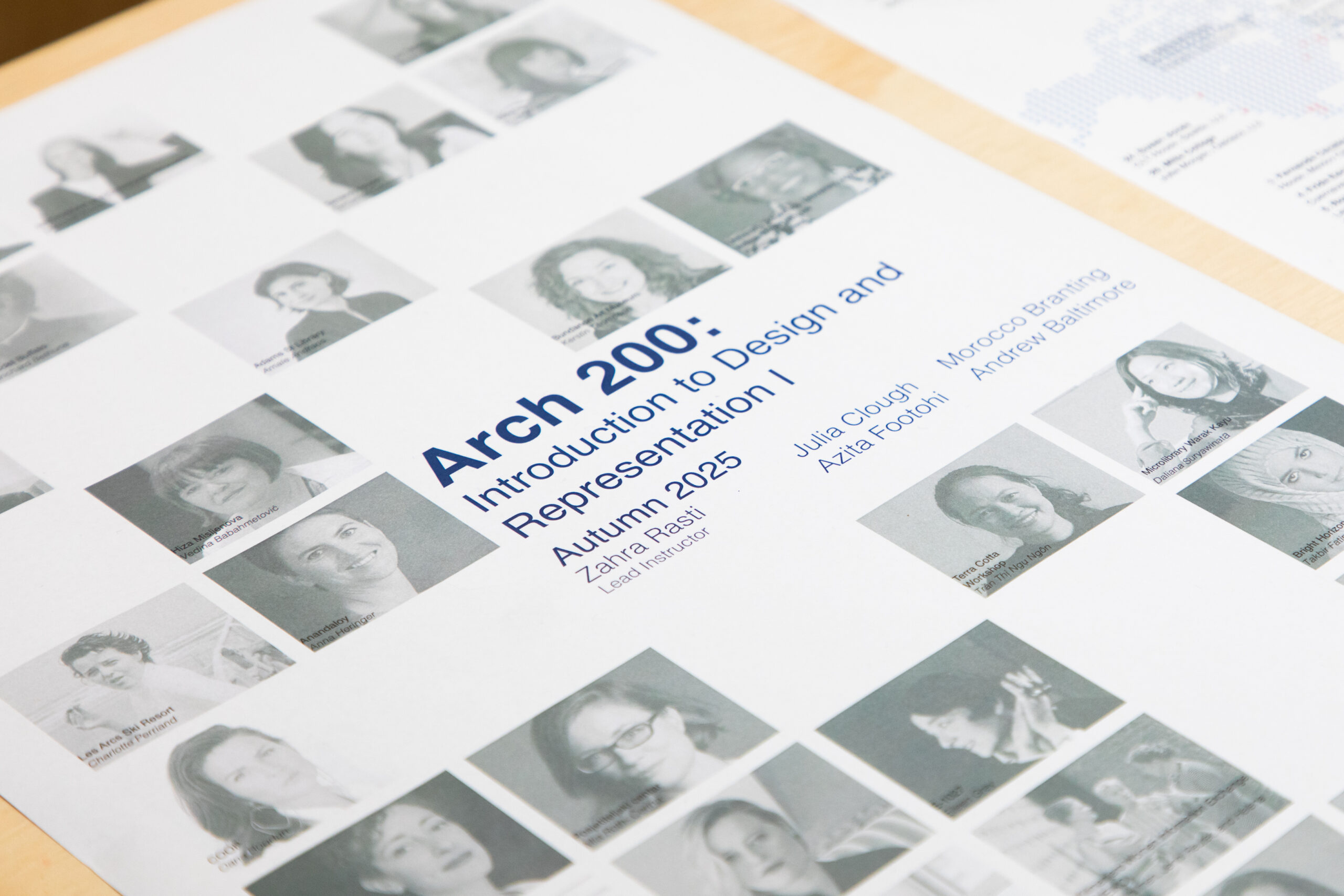
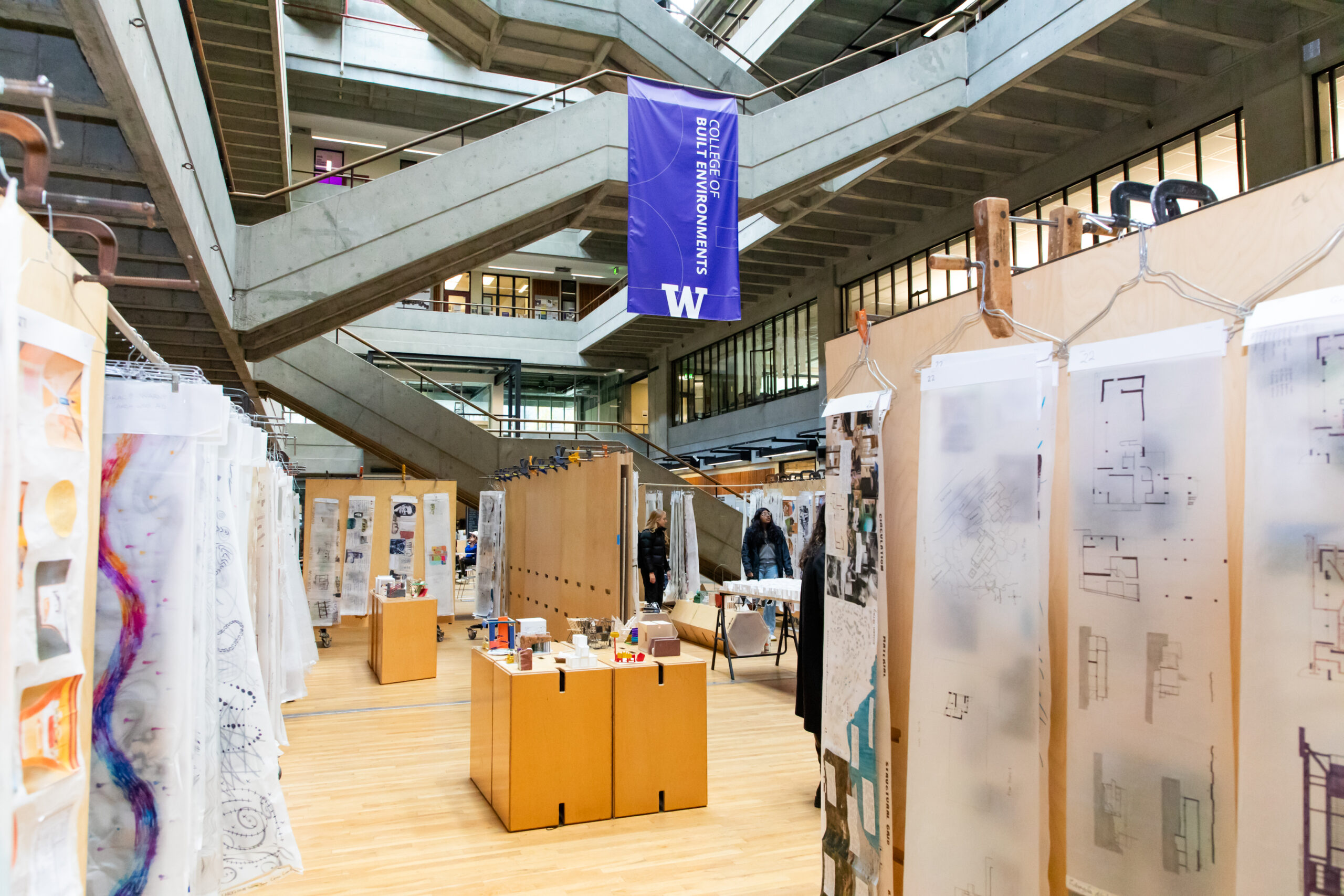
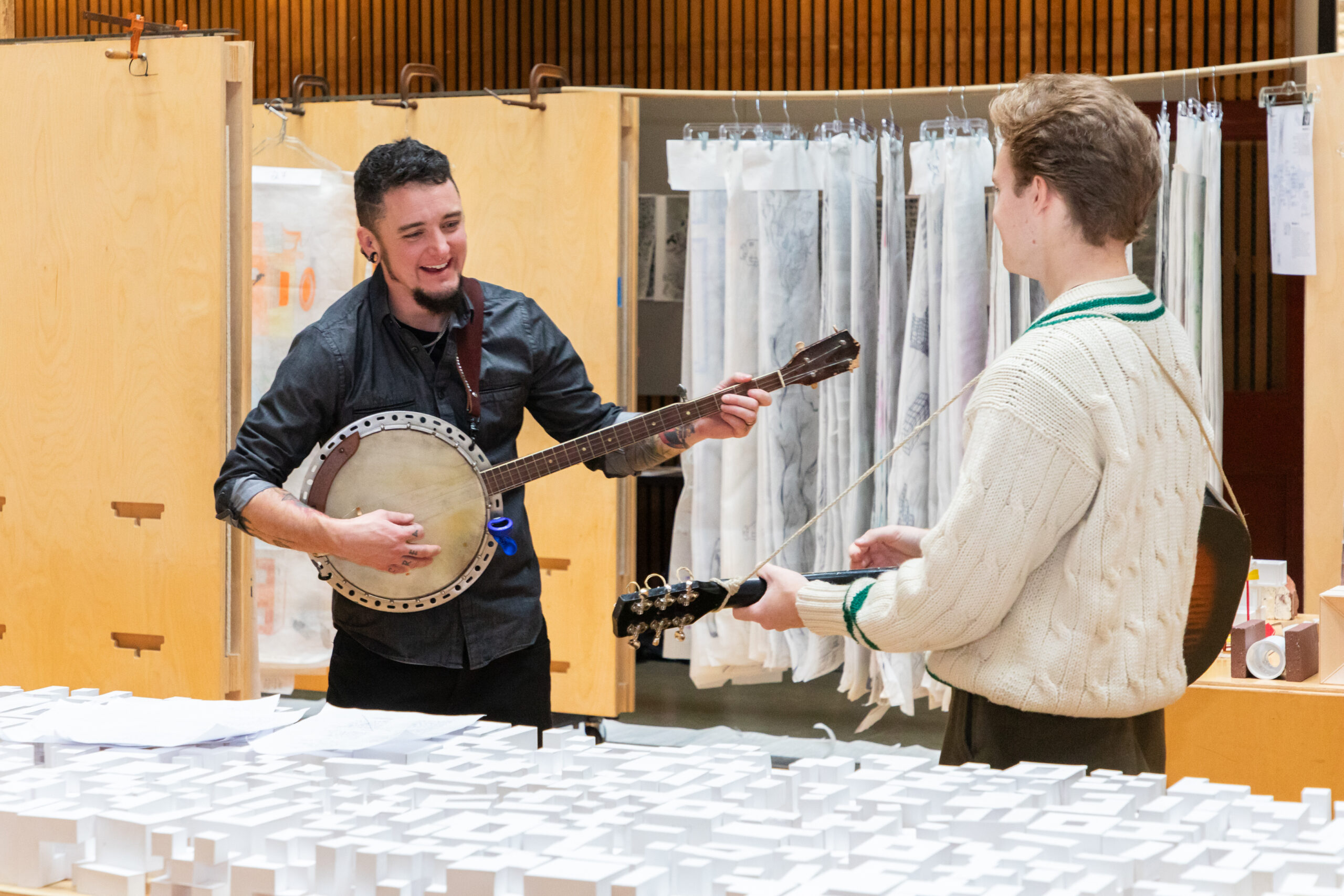
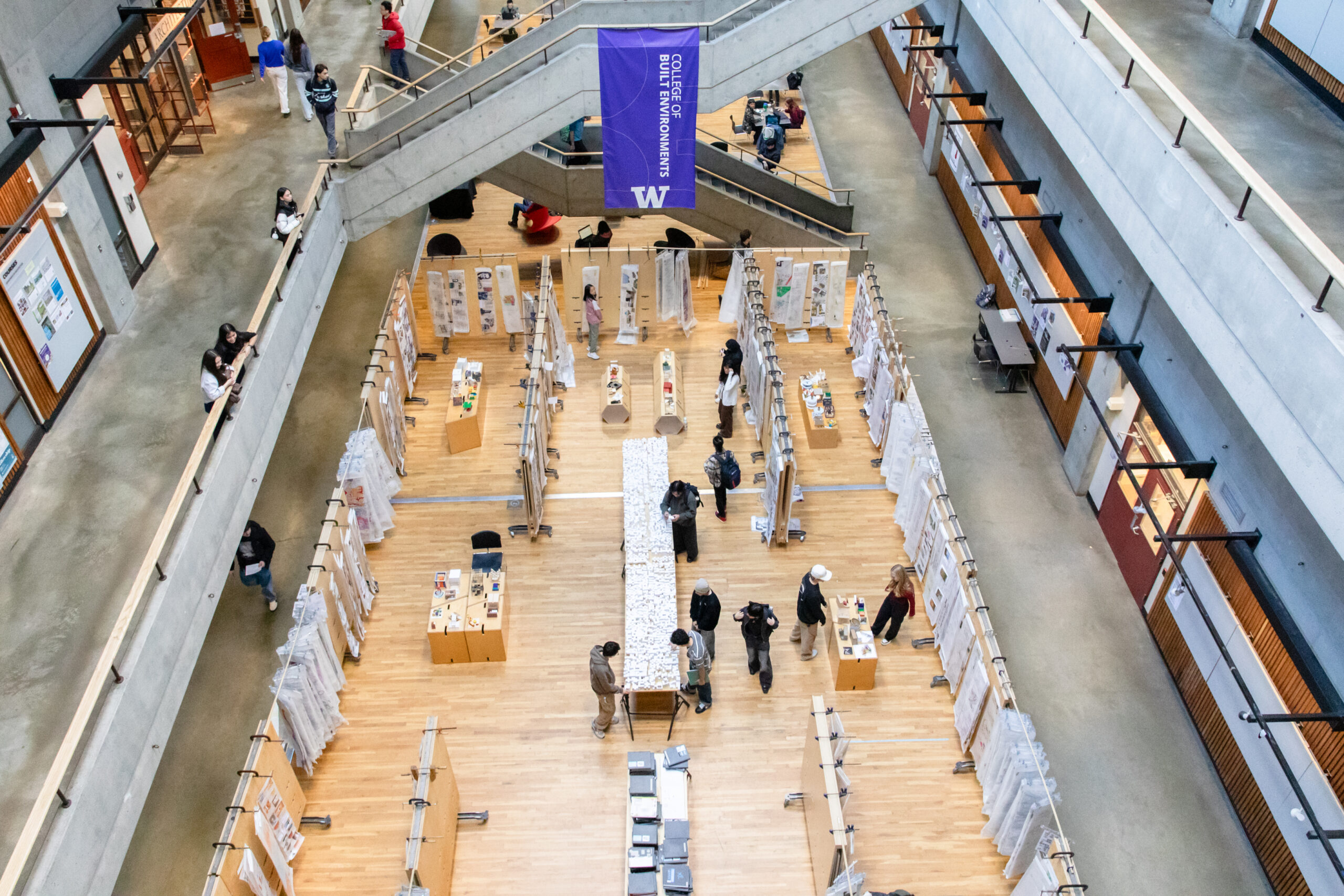
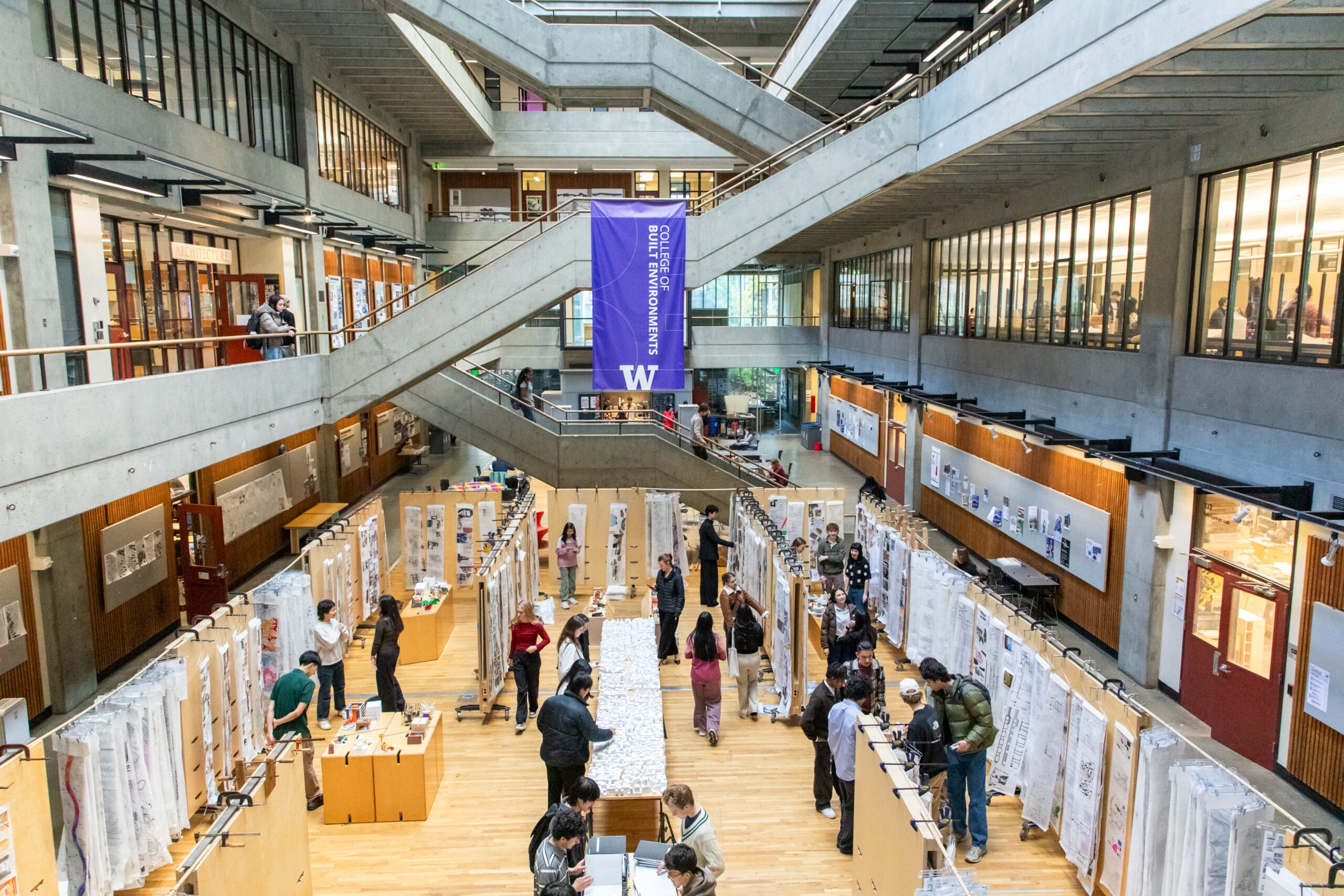
The College of Built Environments (CBE) hosted the ARCH 200: Architectural Design and Representation I end-of-quarter exhibition in Gould Court, presenting more than 400 projects created by 142 first-year architecture students. Assistant Teaching Professor Zahra Rasti along with Julia Clough, Morocco Branting, Azita Footohi and Andrew Baltimore, led students through this ten-week course. The exhibition showcased the full range of their work as they developed foundational skills in drawing, model-making, research, and conceptual interpretation.
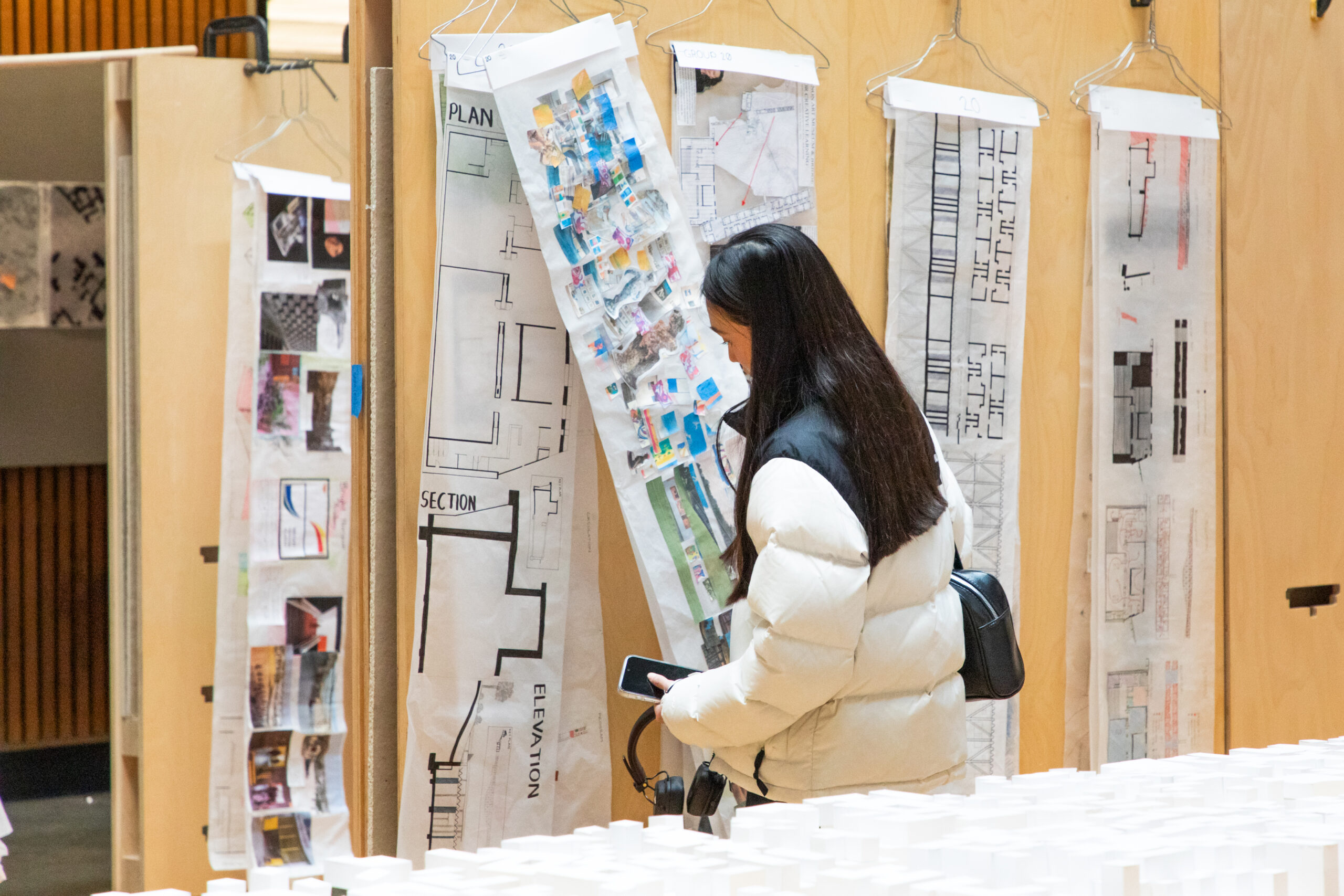
Review sessions were held on Tuesday, December 2, with morning and afternoon case study reviews. All student work was displayed in Gould Court throughout the day, giving visitors opportunities to explore drawings, models, diagrams, and artifacts that traced each student’s learning arc across the quarter.
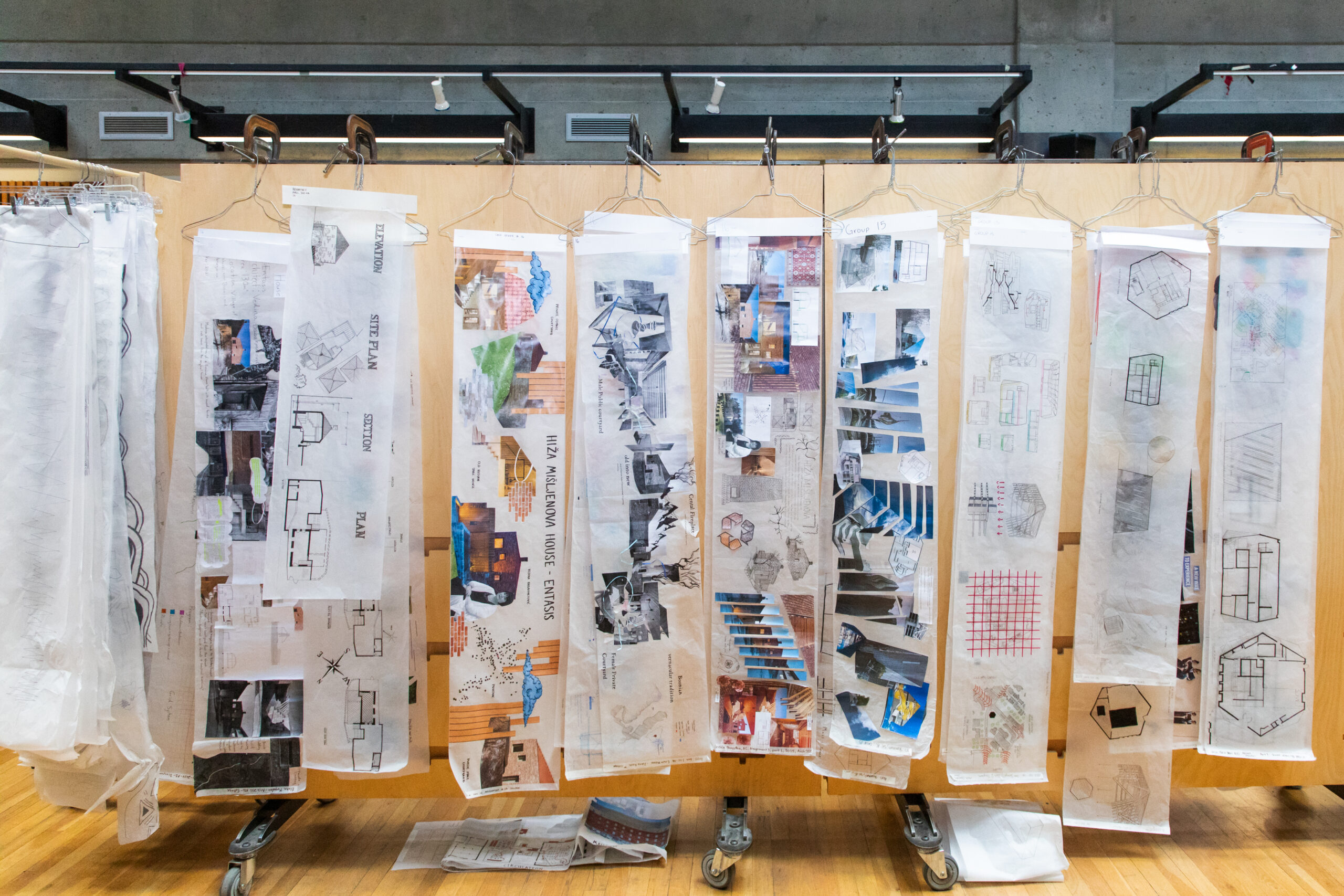
This year’s exhibition emphasized global perspectives by centering the final module on case studies of women architects from around the world. The course included more than 30 precedents representing a wide geographical and cultural range. Featured architects included figures such as Susan Jones, whose CLT House in Seattle was among the studied works. Projects also represented work by Charlotte Perriand, Anna Heringer, Frida Escobedo, Kerstin Thompson, Oana Bogdan, and others, reflecting both historic and contemporary contributions to the field.
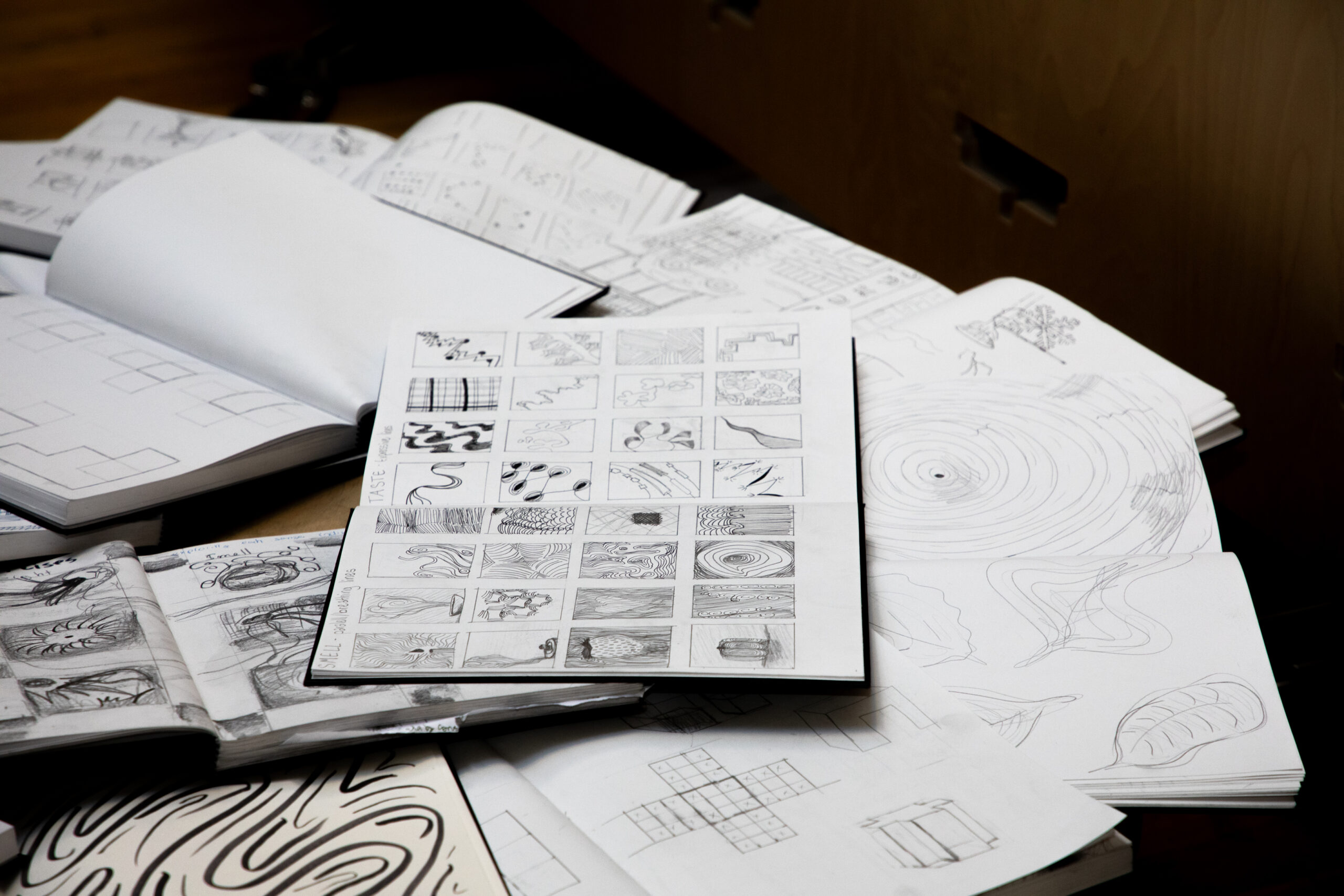
Students began with abstract and representational mark-making exercises, using drawing to translate sensory experiences and learn core tools of architectural representation.
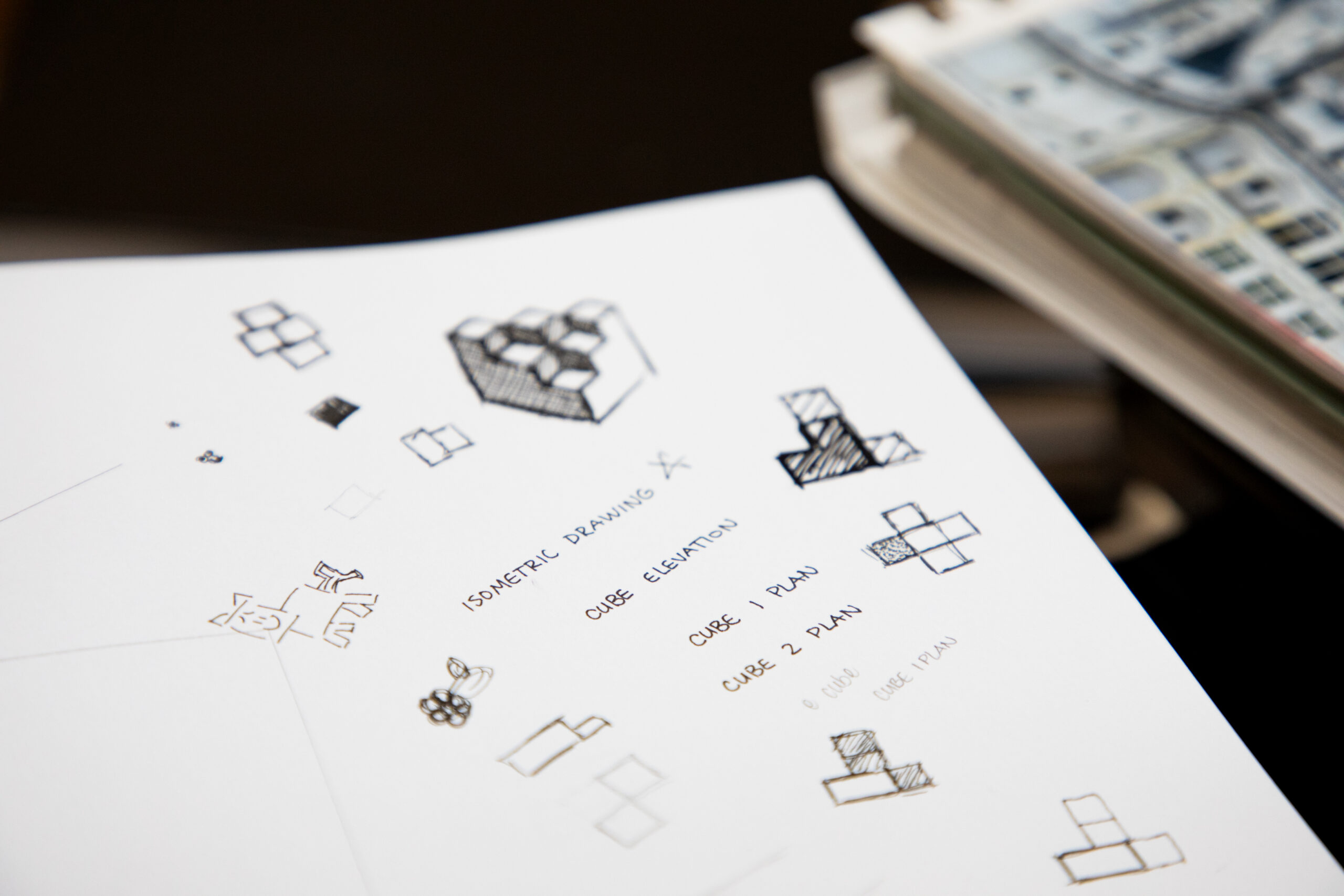
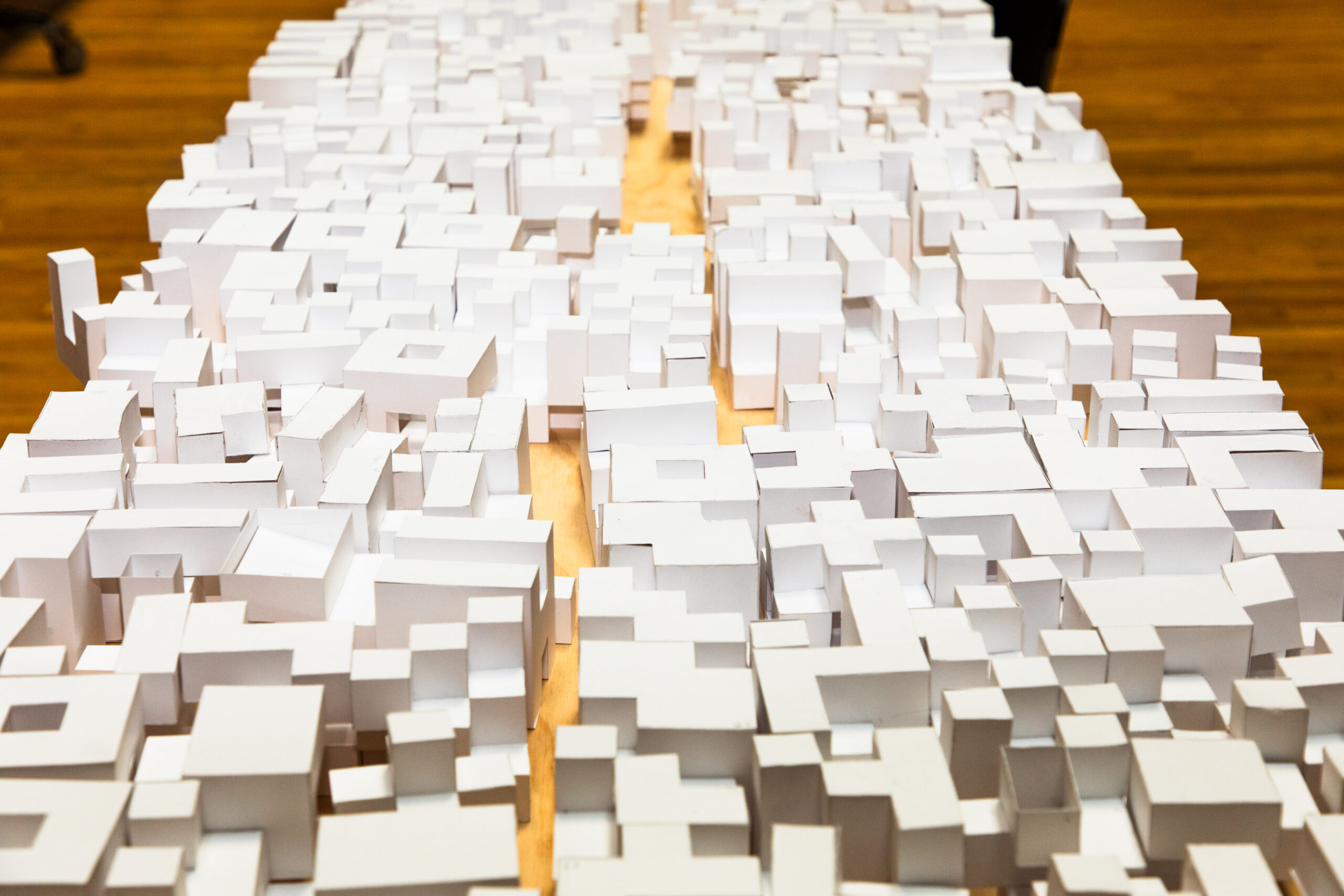
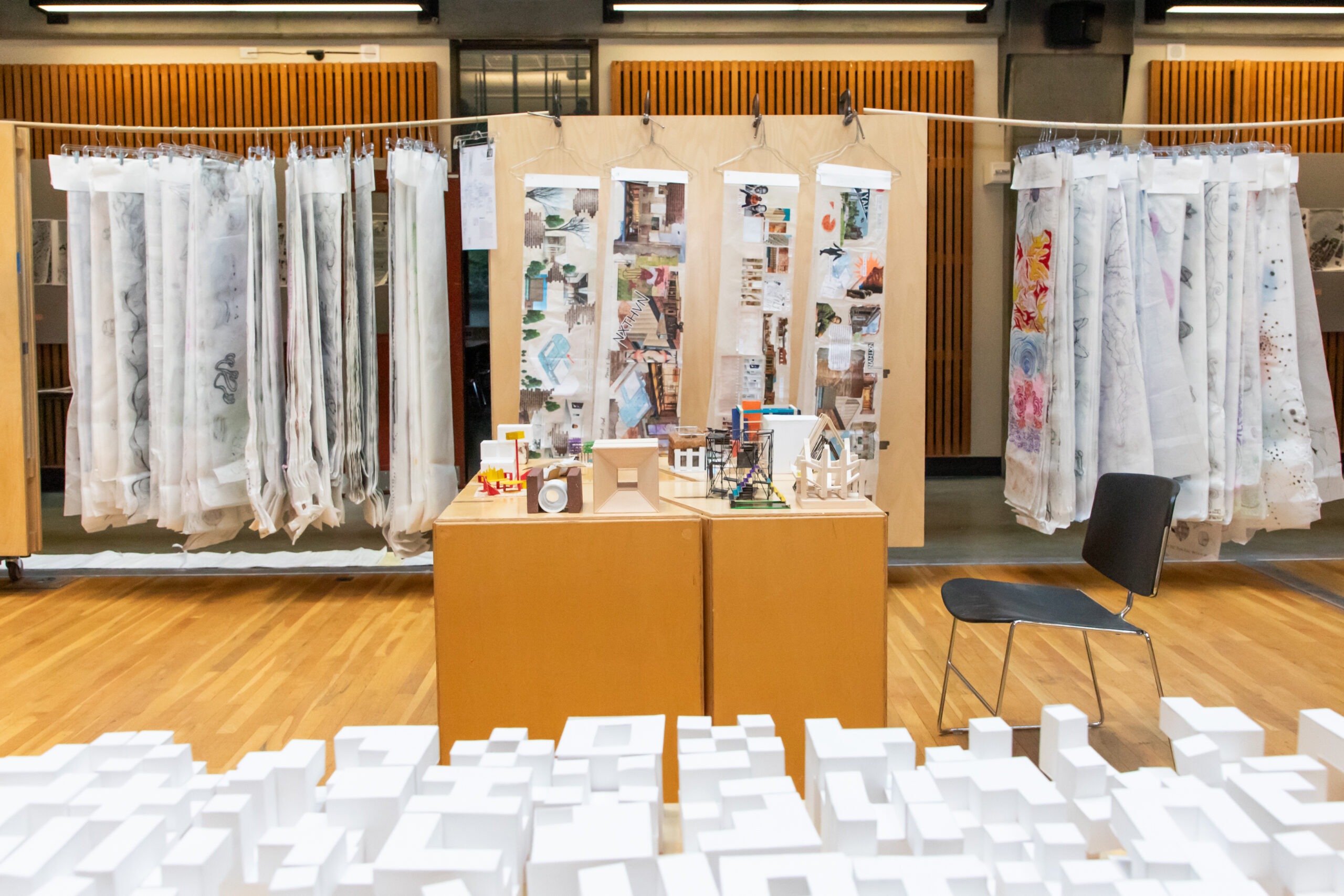
They then moved into simple model-making through paper cubes with distinct voids, combining four cubes into a single configuration and producing orthographic and isometric drawings. In the exhibition, these models formed a larger continuous mass that highlighted both individual work and collective structure.
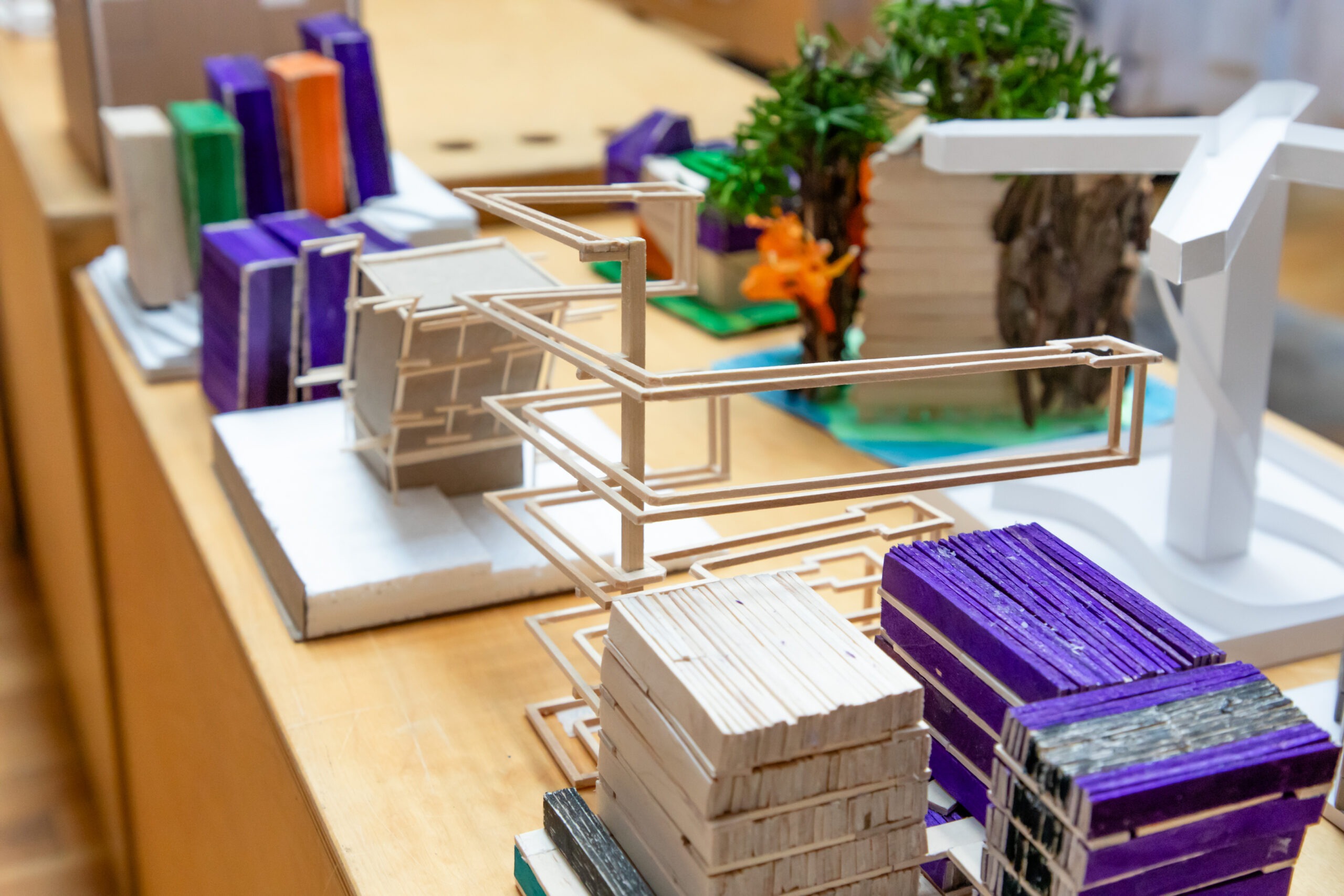
In the final module, students reverse-engineered buildings designed by women architects featured on the course map. They created research collages, trace diagrams, and hand-drafted 1/8-inch orthographic drawings, concluding with a conceptual artifact within a six-inch cube that represented a diagrammatic idea from their case study.
Together, these modules formed a comprehensive introduction to architectural design and representation. The exhibition honored the significant work students accomplished over the quarter and recognized the teaching team, assistants, and reviewers who supported their learning.
Learn more about programs in the Department of Architecture.
Swipe through gallery to see the exhibition.