
Posted on December 10, 2025
Post categories: Architecture Faculty Featured News People of CBE
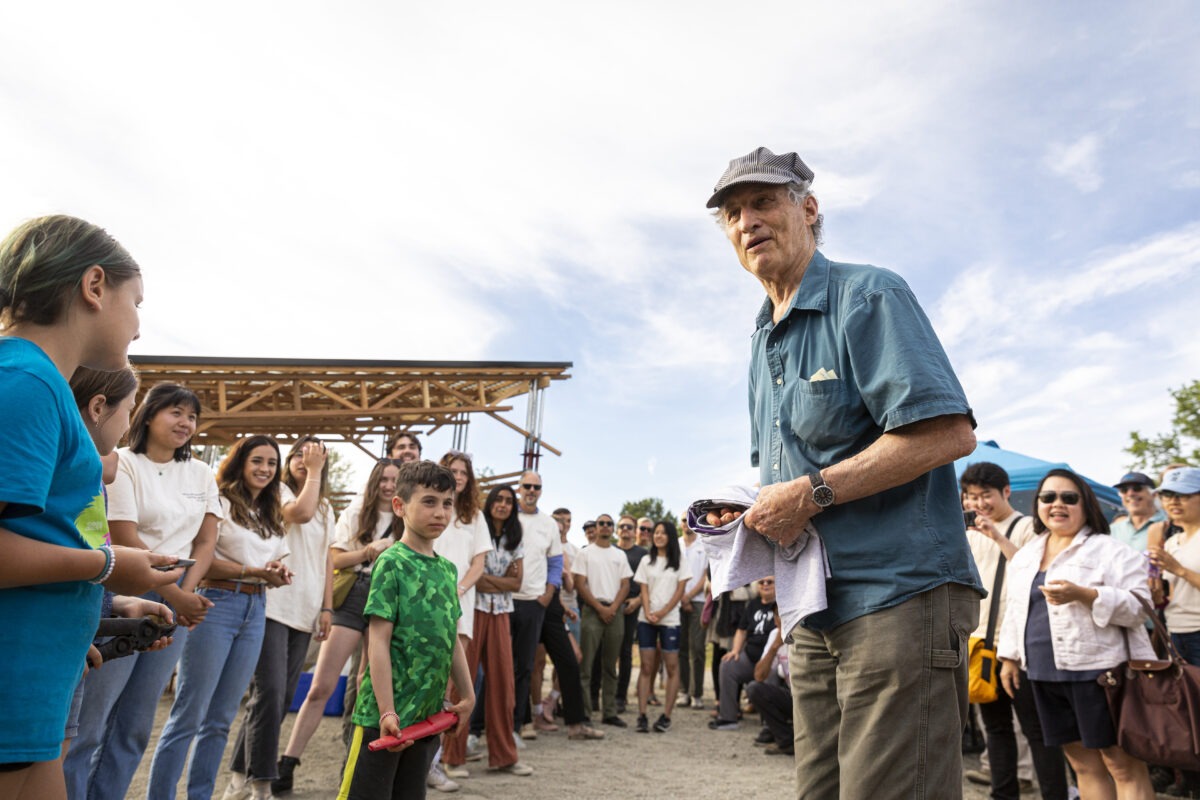
When Professor Emeritus Steve Badanes arrived at the University of Washington (UW) in 1988, he brought more than decades of experience; he brought a radically hands-on approach to architecture. Grounded in community, craft and social responsibility, his approach continues to influence people and places far beyond campus.
Widely known for co-creating the beloved Fremont Troll sculpture under Seattle’s Aurora Bridge, Steve is proudest not of a single project, but of the community-centered philosophy he passed on through the Neighborhood Design Build/Studio (NDBS).
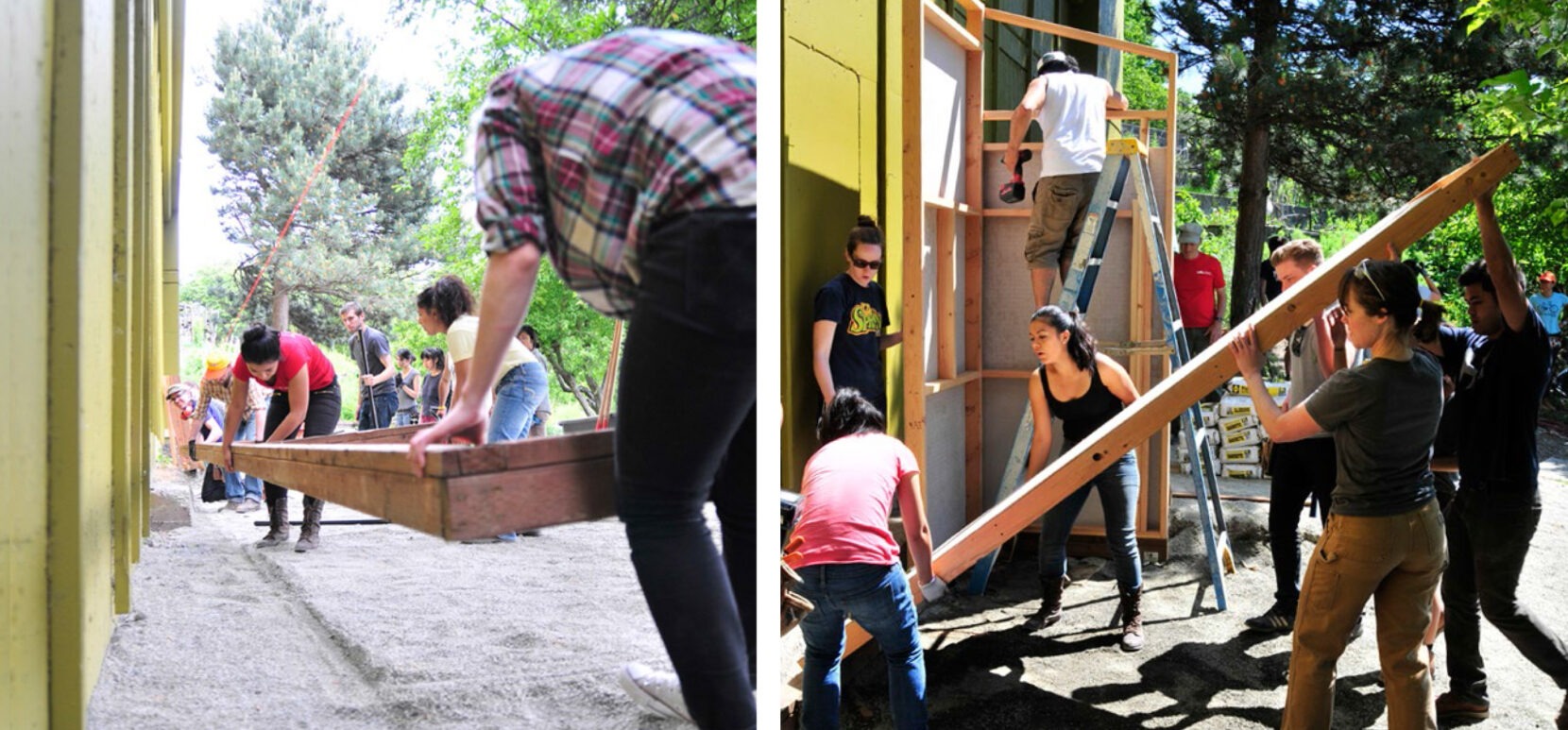
Every spring, the NDBS studio designs and builds a small community project for a Seattle area non-profit, “The studio is about working with real people on real projects, for real clients,” says Badanes. “The students learn about design and construction, but the real lessons involve collaboration, perseverance, teamwork, dignity and service to others.”
Long before he was a professor, Badanes was a practicing architect and builder who believed that design should be hands-on and rooted in real life. After earning an architecture degree from Princeton, he co-founded the Jersey Devil Design/Build collective.
The collective lived on job sites, built everything by hand, and rejected the traditional architect-contractor divide. Their projects ranged from off-the-grid cabins to whimsical public installations, all infused with a DIY ethos and a deep respect for place.
“We were trained in design but wanted to get our hands dirty,” Steve said. “We thought the best way to learn was to build.”
The Jersey Devil crew became known not just for their work but for their philosophy: that architecture should be rooted in community, collaboration and craft. That same spirit came with Steve when he joined UW and became lead instructor of the NDBS in the late ’80s, bringing with him a legacy of learning by doing and building by hand.
Since the 1970s, the NDBS has partnered with more than 50 nonprofit and community organizations across the Seattle region. The program was originally founded by Andy Vanags and Barry Onouye, with early projects focused on building playgrounds for local schools.
During the 11-week course, students move from sketches to sawdust, designing and constructing projects that serve the public good: ADA-accessible pathways, outdoor classrooms, food pantry infrastructure, and more.
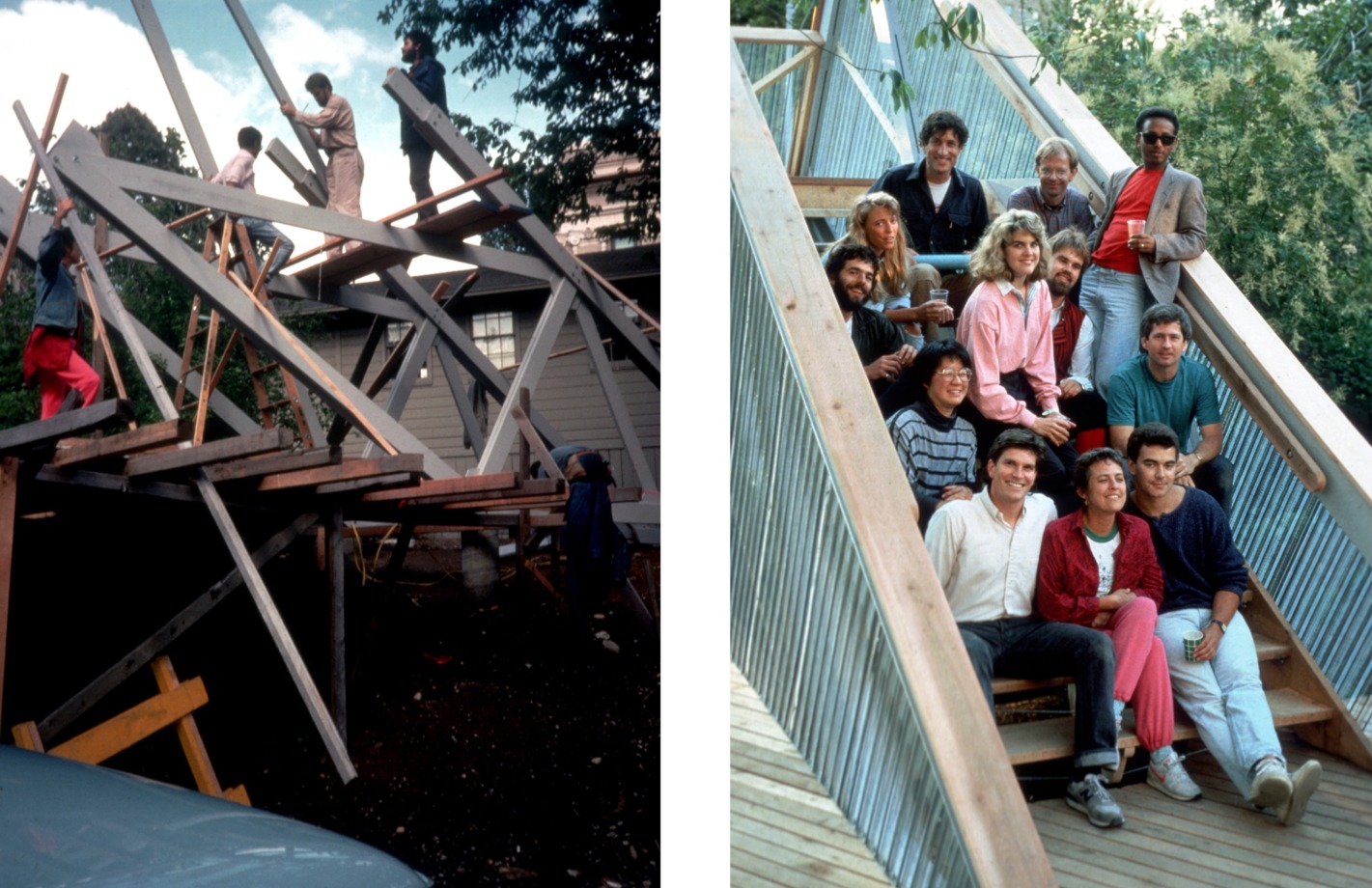
Students constructing "Stairway to Nowhere" in 1988, making it the first NDBS project of many to come (Left). Steve Badanes posing with students on "Stairway to Nowhere" (Right).
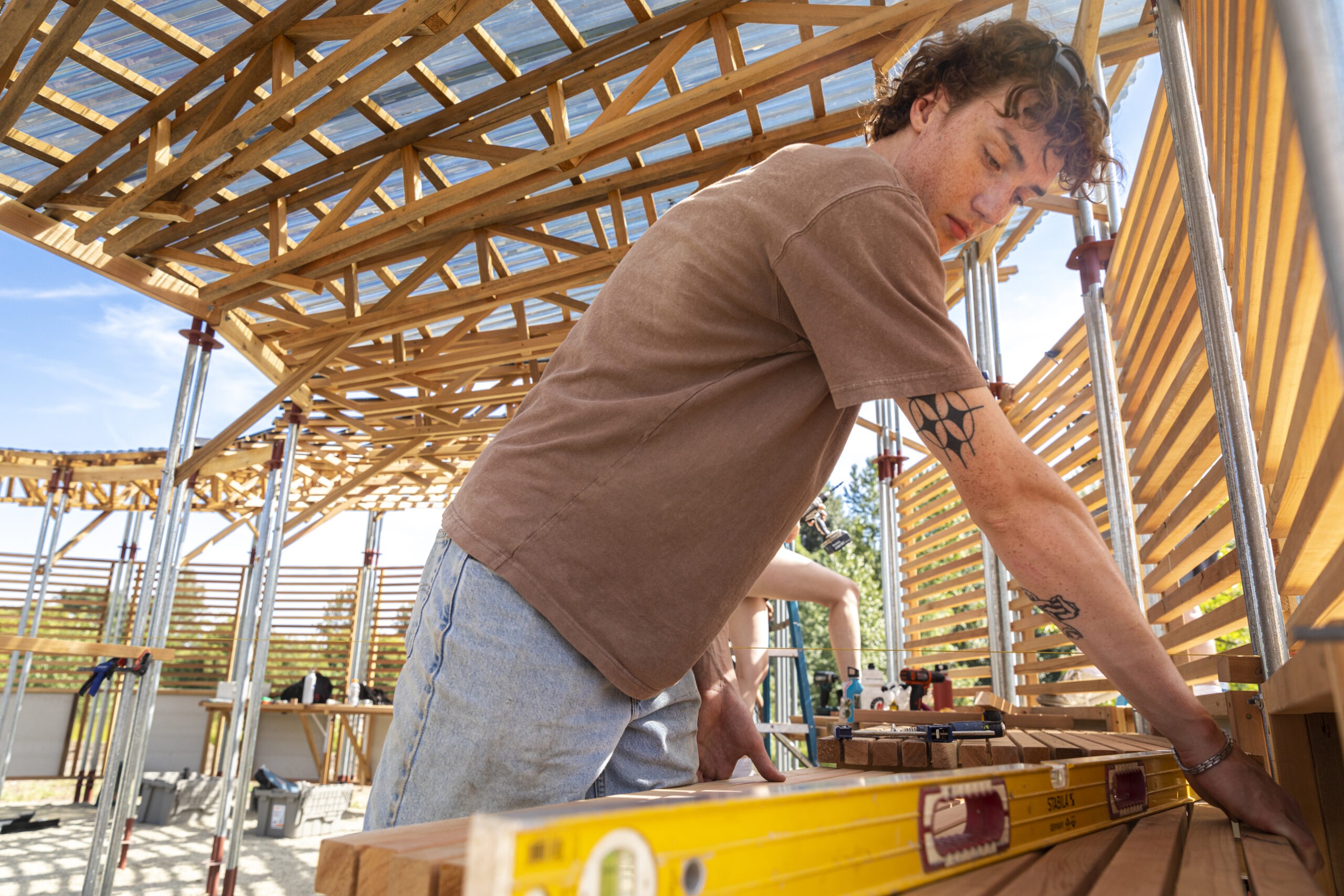
Students gain hands on experience during the NDBS, where Badanes and Labarre challenge students to quickly make their ideas into real structures. Featured: Cultural Kitchen Build, UW Farm, 2023.
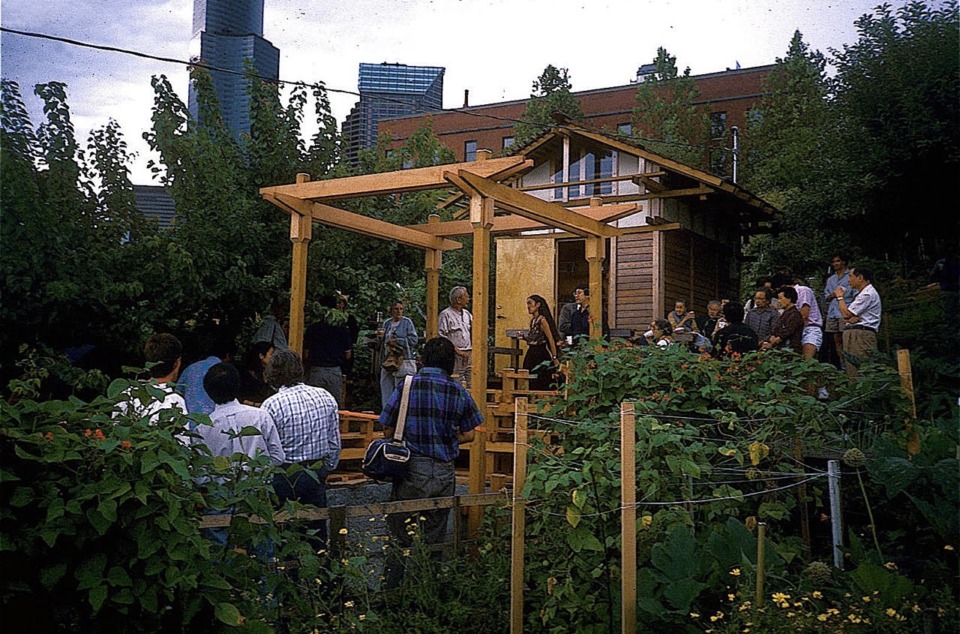
Early projects helped shape many local gathering places, such as multiple builds at the Danny Woo Community Garden. Featured: Danny Woo Community Garden Build, 1990.
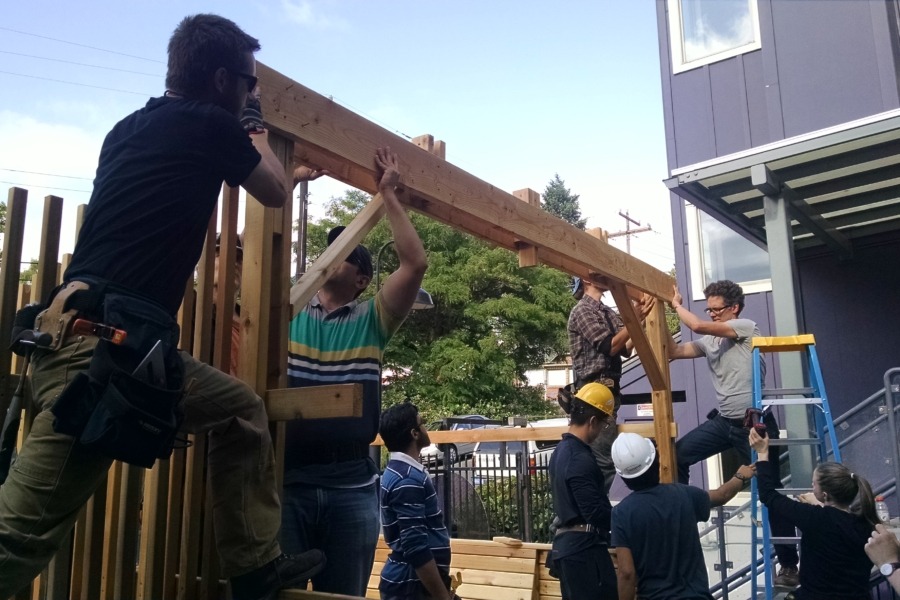
Jake Labarre assisting students at the "New Beginnings" Build in 2016.
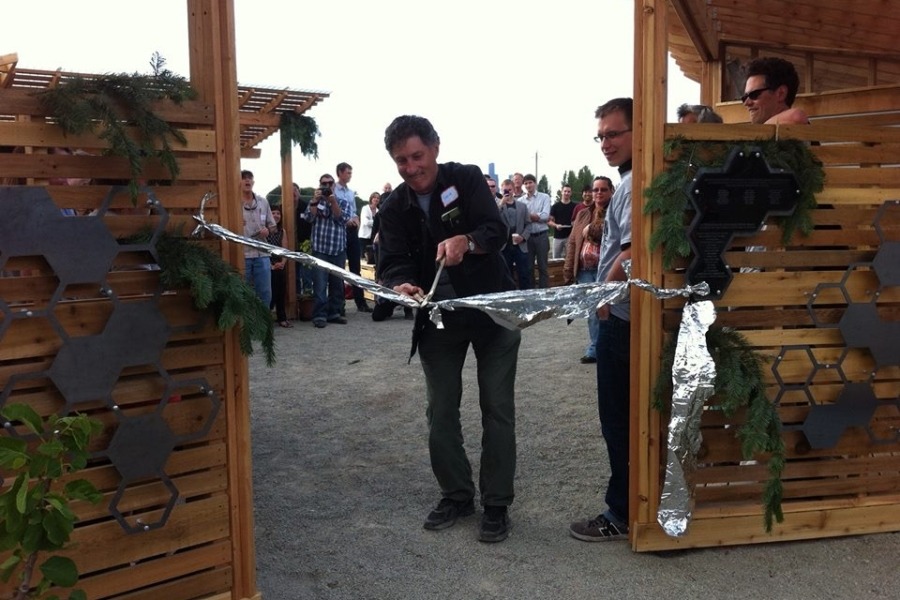
Steve Badanes cutting ribbon at celebration after the completion of a community gathering site at the Beacon Food Forest, 2013.
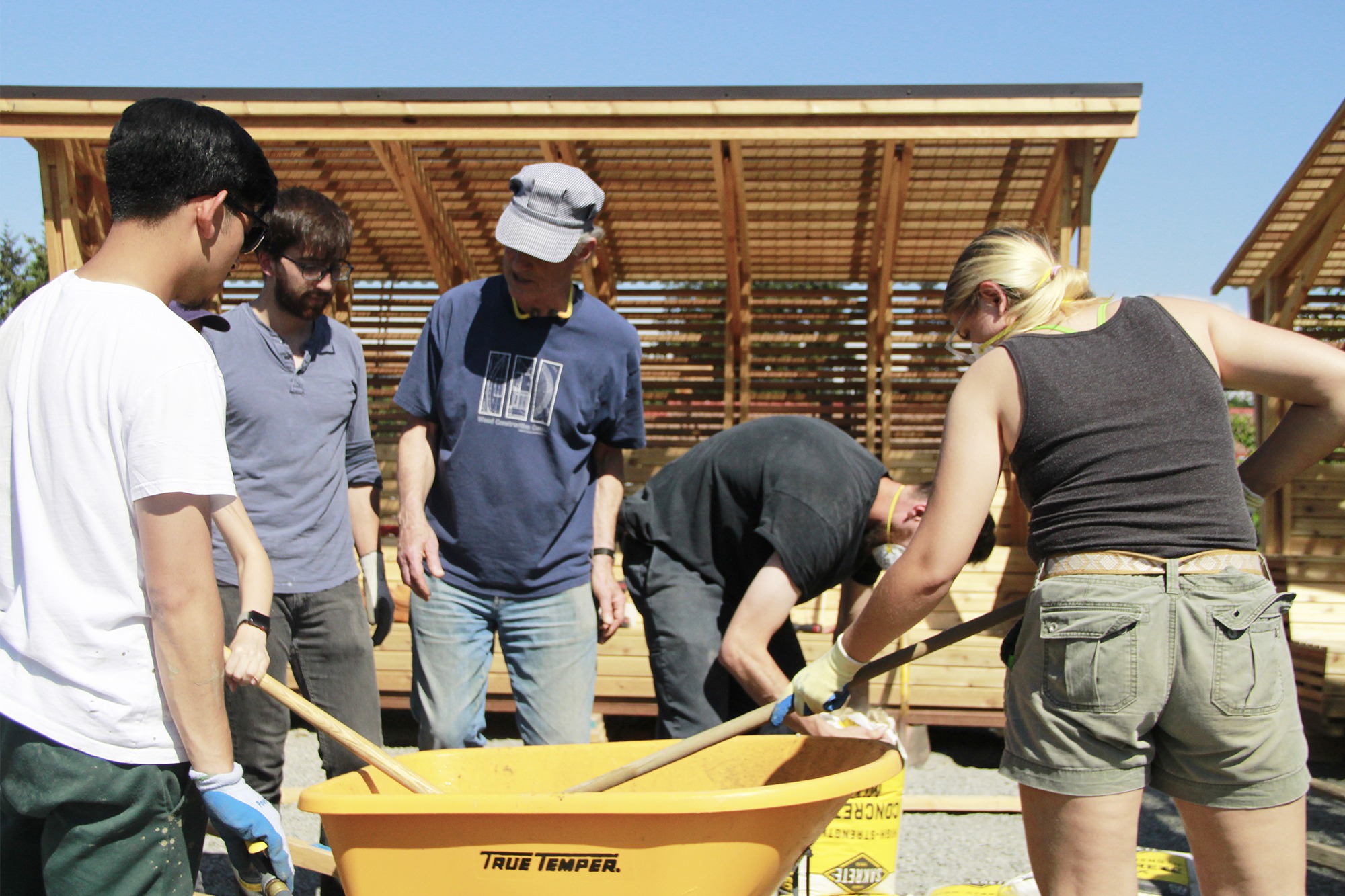
Steve Badanes with students at the "Garden Dugout" Build in 2018.
Students apply to join the studio, which meets four days a week. The studio emphasizes team ownership over individual competition. “A consensus process leads to group ownership of the idea and enthusiastic participation of all during the construction phase.”
The process begins with simple paper and plywood design exercises and quickly evolves into client meetings, group critiques and full-scale construction. Students handle everything from design to budgeting, fabrication and installation.
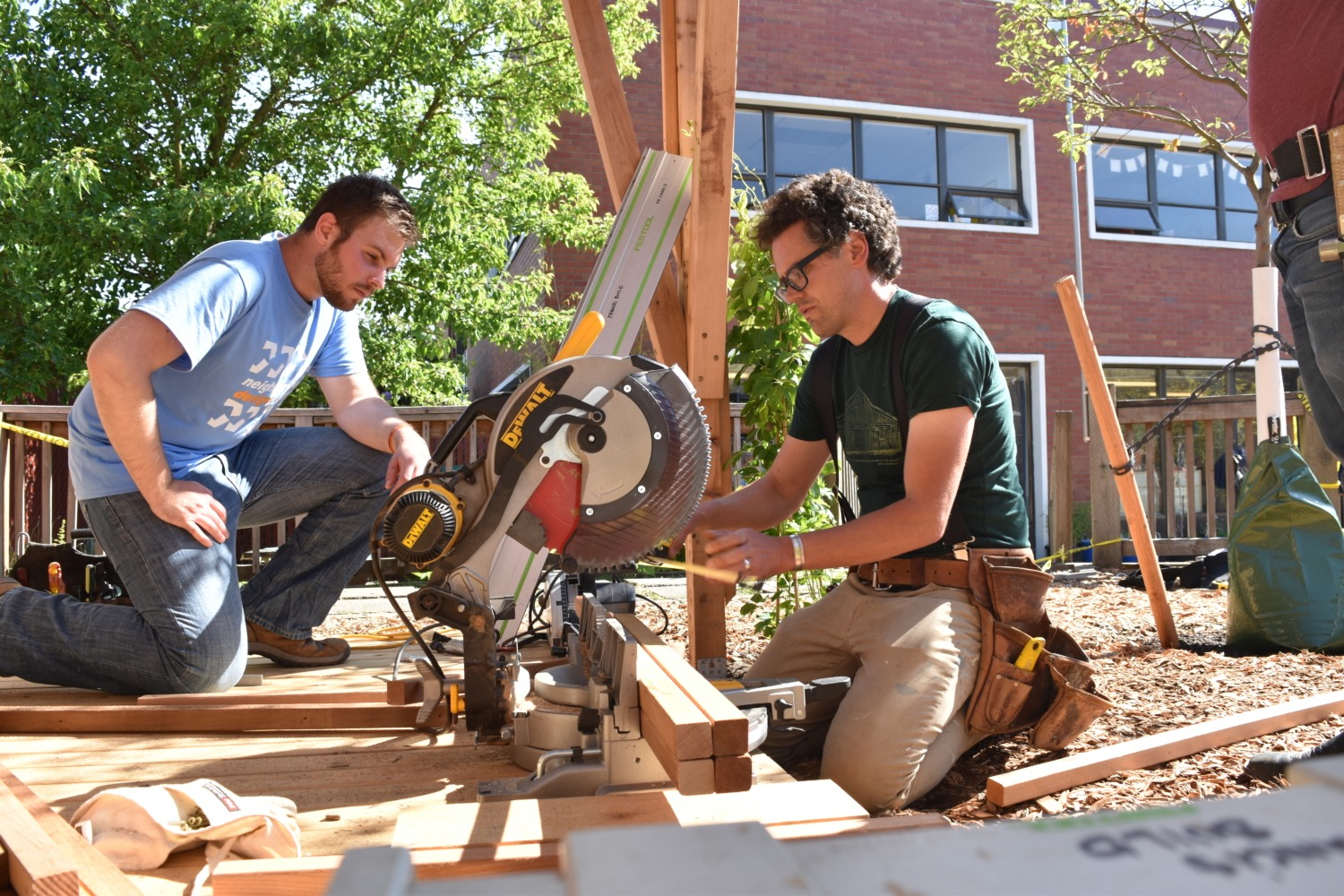
According to Jake LaBarre (M’Arch ‘09), an associate at Miller Hull Partnership and now lead instructor of the NDBS, what makes the Design/Build Studio uniquely impactful is its community-facing structure. “You work for clients outside of the university. Occasionally we do campus projects, but usually it’s a nonprofit or local group. That changes the whole learning experience.”
Students aren’t just designing; they’re solving real-world problems, negotiating with teammates and building for people who actually use the space. “You don’t really understand pragmatic design tools until you apply them for a real client or argue through a detail with your classmates,” LaBarre said. “That’s the magic of the studio—and that’s Steve.”
Steve’s advice for a successful build? “Start small. Keep it simple. Make it fun.”
Araceli Lopez first met Steve Badanes in 2014, during her final undergraduate studio at the UW. As a dual-degree student in architecture and construction management, she chose the NDBS to deepen her understanding of construction, an interest shaped by childhood memories of her father working in the trades. “I was a girl, so they didn’t allow me on the site,” she said, “but it made sense for me to take Steve’s course.”
That studio, she recalls, was unlike anything else in the College of Built Environments (CBE). “It was the most collaborative I’ve ever experienced,” Lopez said. “All of us were sitting together, discussing things. It wasn’t about isolating into groups. It was about working things out together.”
The team built a Children’s Garden Cookery at the Danny Woo Community Garden, and Lopez vividly remembers how meaningful it was to see it come to life. “We critique work so heavily, and sometimes people are just so happy to have something—to store things, to have a place to cook, something beautiful.”
Lopez admits she struggled in traditional studio settings but found encouragement in Steve’s direct, supportive style. “I didn’t think I was a very good student at the UW architecture department. I just didn’t fit in,” she states. “My colors were too bright. But Steve didn’t care how you dressed or drew, he just said, ‘Keep working.’” That approach created space for her to thrive.
“Steve’s studio made me unafraid of construction and architecture,” she said. “I’m just already ahead of it now, and it’s because Steve and others were like, ‘It’s not that hard. Just keep going.’”
Lopez received her B.A Arch Design & Construction Management dual degree from the UW in 2015 and later went on to receive an M.Arch from Yale University in 2021. Today, Lopez lives in New York and continues working on community-based architecture, the same ethos that shaped her time in Steve’s studio. Badanes nominated her for the UW Architecture Alumni GOLD (Graduate of the Last Decade) Award in recognition of her impact, which she won in 2025.
“The studio planted a seed,” she said. “In my opinion, it’s the best kind of work—the most fulfilling.”
While the studio is rooted in Seattle, Badanes’s influence stretches far beyond the Pacific Northwest. He has led design/build workshops in over a dozen countries, from Mexico to Ghana, always championing a hands-on, socially engaged practice of architecture.
“I’ve had the pleasure of knowing and working with Steve for a long time,” states Dean Ken P. Yocom. As a student in the Master of Landscape Architecture program, Dean Yocom had the opportunity to travel abroad with Steve and others multiple times renovating an old chicken coop into a community gathering space in Havana, Cuba, constructing a library in Cuernavaca, Mexico, and a guesthouse in Auroville, India.
“Each of these opportunities transformed my educational experience as we worked collaboratively with communities, adopted culturally-specific building techniques, and utilized local materials” says Dean Yocom. “Through it all Steve was central to the work, challenging students to be both thoughtful and direct in their design communication, while translating our work into something that could actually be built.”
Still, Seattle remains home. In addition to the Fremont Troll, he’s contributed to numerous local projects, including installations for Bumbershoot and youth building programs. However, his proudest accomplishments are the ones that live on through others: the student who became a community architect, the team that brought inclusive play spaces to underserved neighborhoods, the alum who now leads a design/build nonprofit of their own.
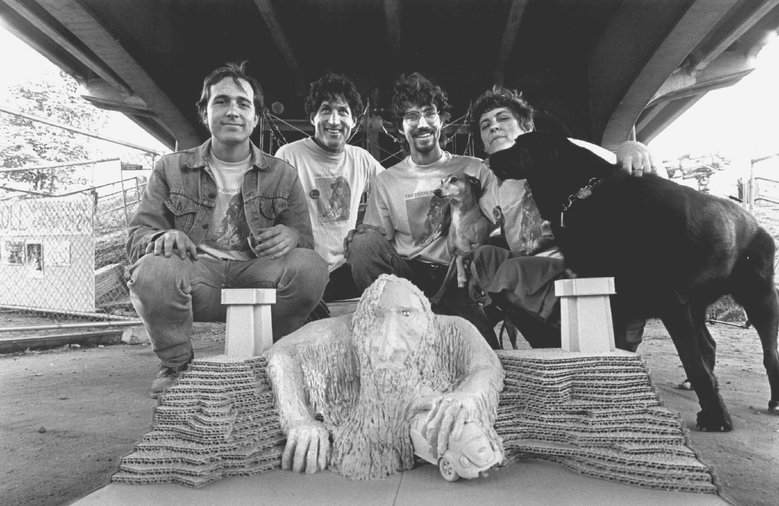
Steve’s impact reaches beyond Seattle. He’s led design/build workshops around the world and won awards for his innovative teaching. But ask him what matters most, and it always comes back to students and community. “We don’t just want to make good architects,” he said. “We want to make good citizens.”
LaBarre credits Steve with shaping not only how he views architectural education, but how he teaches it today. As Steve transitions into retirement, LaBarre has stepped in to lead the NDBS, carrying forward its community-driven mission and design/build ethos. “I’m standing on his shoulders,” he said. “The foundation Steve laid is what allows this work to keep evolving.”
Reflecting on Steve’s commitment, LaBarre emphasized how singularly focused Badanes remained throughout the years. “It’s not easy to run a program for thirty-something years,” he said, “especially with different deans, different chairs. But Steve kept it going by always prioritizing the students. He’d say, ‘My students come first,’ and meant it.”
As the NDBS enters its next chapter, Steve’s legacy lives on in every structure built, every student supported and every community served.
Learn more about the NDBS and Steve’s impact locally and globally.