
Posted on December 18, 2025
Post categories: Architecture Climate Faculty Landscape Architecture News Research
Can food waste become a catalyst for climate justice, clean energy and community resilience?
A 2024–25 EarthLab Innovation Grant supported a collaboration between the Duwamish Valley Sustainability Association (DVSA)—a community organization that supports equitable economic growth without harmful impacts to the environment, the Just Circular Communities Collaborative (JC3), and a University of Washington (UW) research team to explore that question. As a next phase that grows from a small, pilot anaerobic biodigester at Food Lifeline in collaboration with DVSA, they conducted a feasibility study on installing a large-scale anaerobic biodigester within the South Park neighborhood, a technology that turns food waste into biogas and liquid plant food.
Led by Catherine De Almeida, associate professor in the Department of Landscape Architecture, the team included UW students Sarah Chu (MLA ’25) and Sarah Maness (MLA ’26), with support from Gundula Proksch, professor in the Department of Architecture. They evaluated whether a biodigester could work in South Park, a Seattle neighborhood facing high levels of pollution and environmental risk.
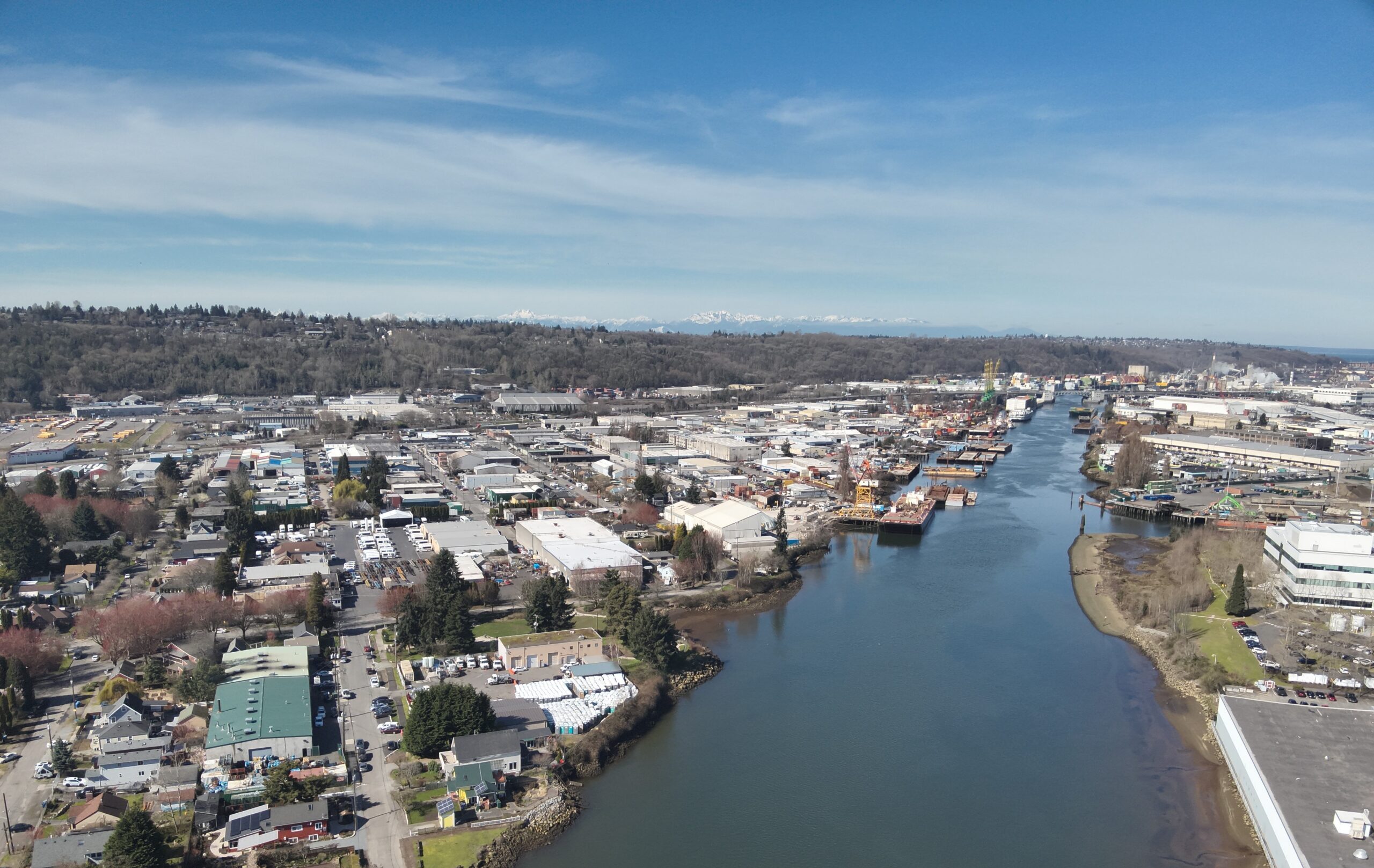
South Park is a diverse neighborhood along the Duwamish River and one of the most environmentally overburdened areas in King County. Home to many immigrant and Spanish‑speaking families, the community experiences high levels of air and noise pollution and sits next to the Lower Duwamish Waterway Superfund Site.
Despite hosting major pieces of Seattle’s waste infrastructure, South Park lacks equal access to services like recycling and clean energy. This mismatch reflects a long history of underinvestment and environmental racism. The biodigester project is envisioned as a step toward reversing that pattern by building community-owned infrastructure that supports cleaner air, economic growth and climate justice.
De Almeida first connected with DVSA Executive Director Edwin Hernandez in 2021 through their shared interest in circular economies. Circular economies keep materials in use, regenerate natural systems, and reduce waste through reuse, repair, recycling and composting. In this system, waste becomes a resource, green jobs are created and value stays in the neighborhood.
Their partnership began with a UW design studio that reimagined the biodigester as a public space shaped by community priorities. “The students worked in small groups, and they developed different visions for how the biodigester could not only be a piece of infrastructure, but also a public space and source of community support,” says De Almeida
A second interdisciplinary studio in 2022 expanded the collaboration and contributed to the creation of JC3, an initiative focused on supporting community-led circular economy projects that address environmental justice.
“From the first studio, we were asking questions like, how does the biodigester become a catalyst for a circular system or circular economies?” says De Almeida, “Then, we started to develop this idea of just circular communities,” which was supported by the Urban@UW Research to Action Collaboratory.
With funding from EarthLab, De Almeida’s team launched a feasibility study to explore the potential of a biodigester in South Park. The goal: to provide both a technical roadmap and a community-driven model for implementing circular economy principles in frontline neighborhoods.
DVSA served as the community lead, bringing technical expertise, long-standing relationships, and guidance shaped by local perspectives. Working with JC3 members, they facilitated feedback, secured additional funding and helped align project goals with community priorities. Seattle Parks Foundation provided fiscal sponsorship, and ECOnorthwest conducted economic and technical analysis, including job creation and revenue modeling.
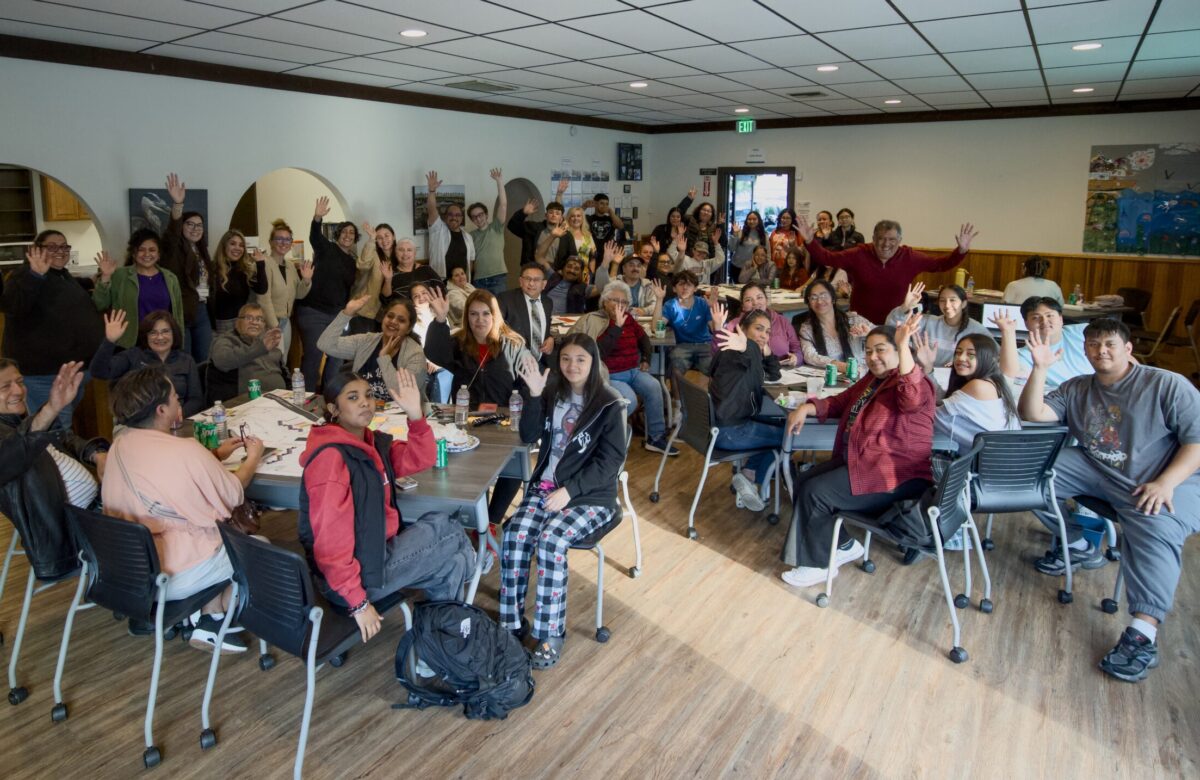
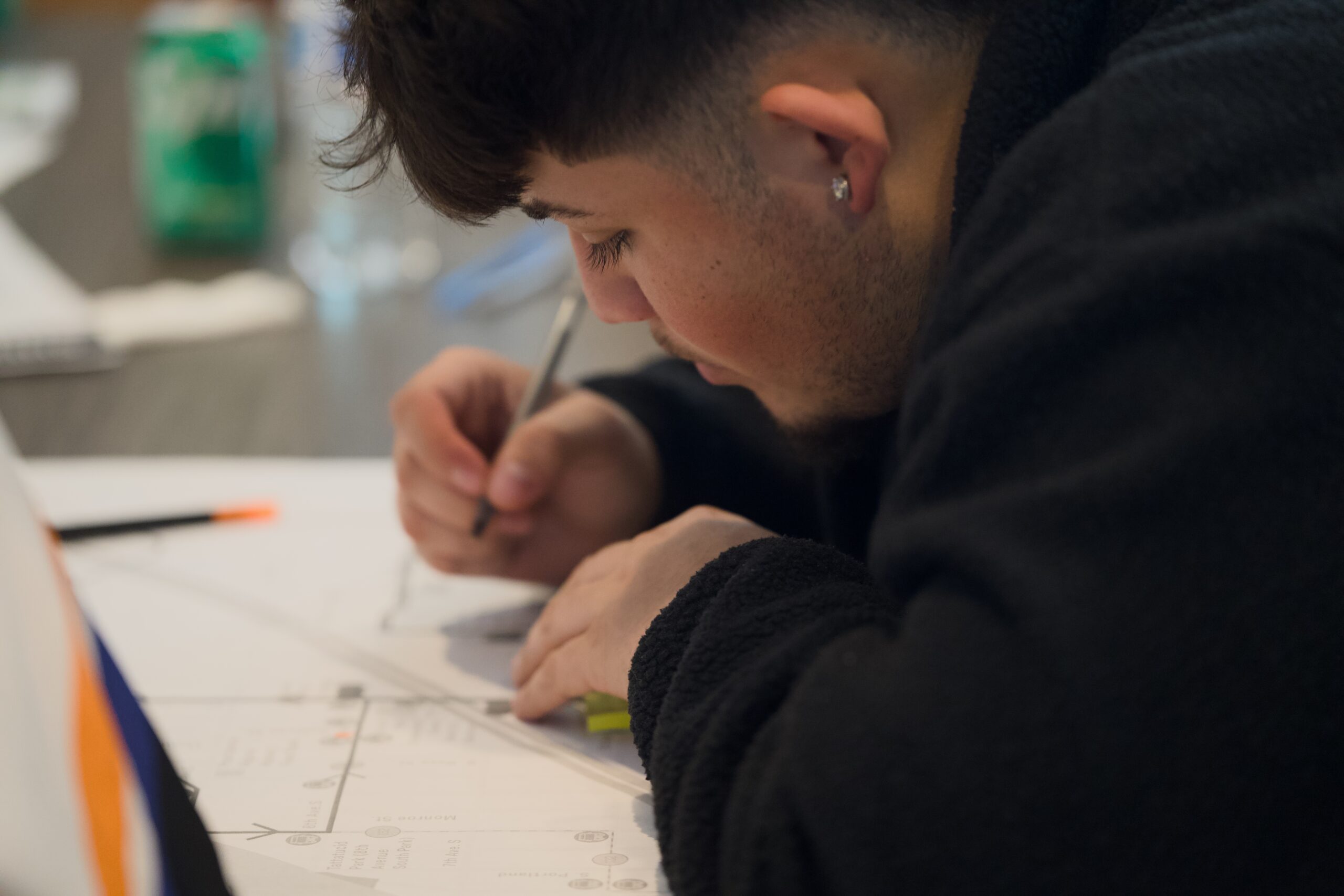
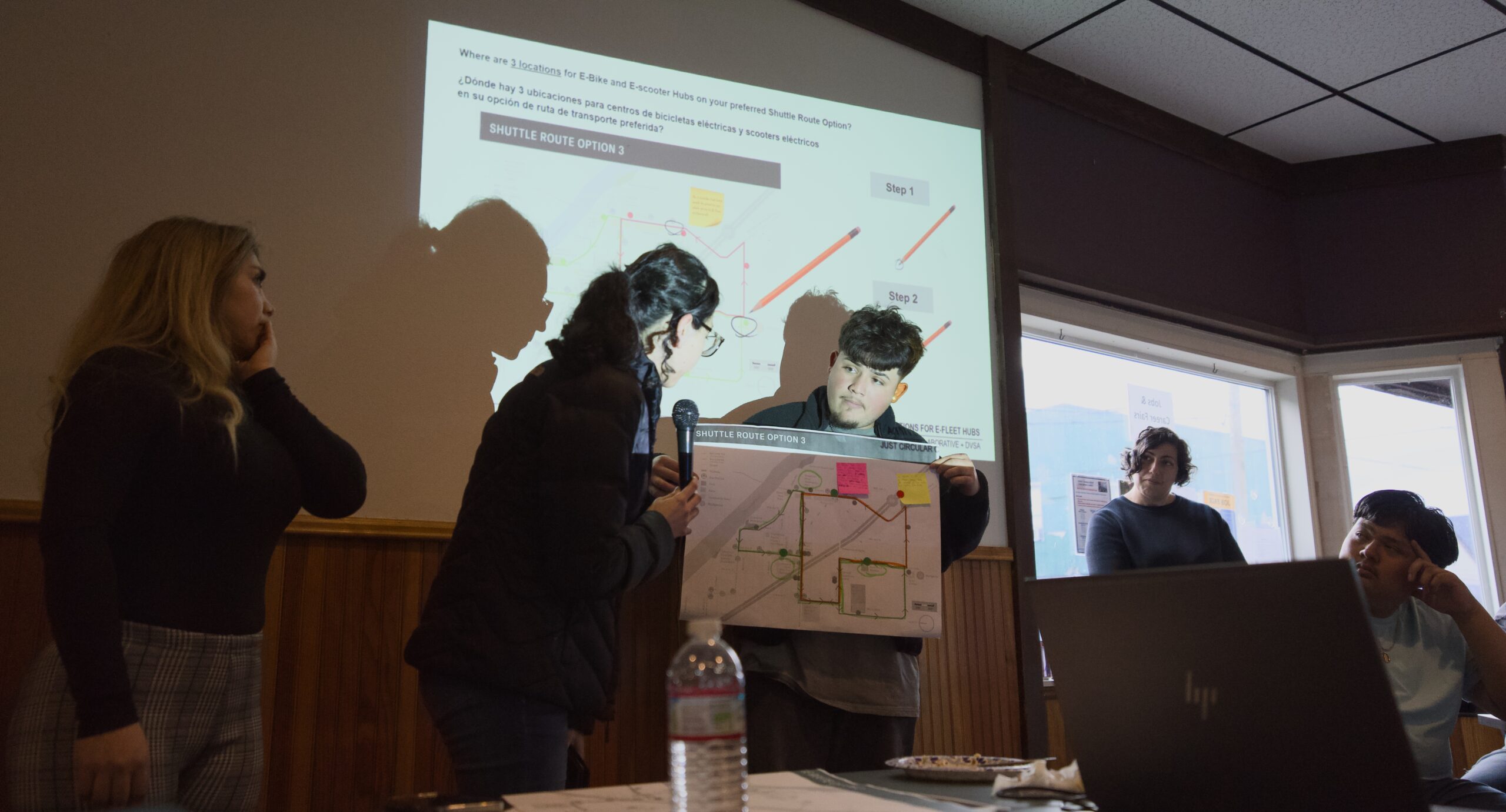
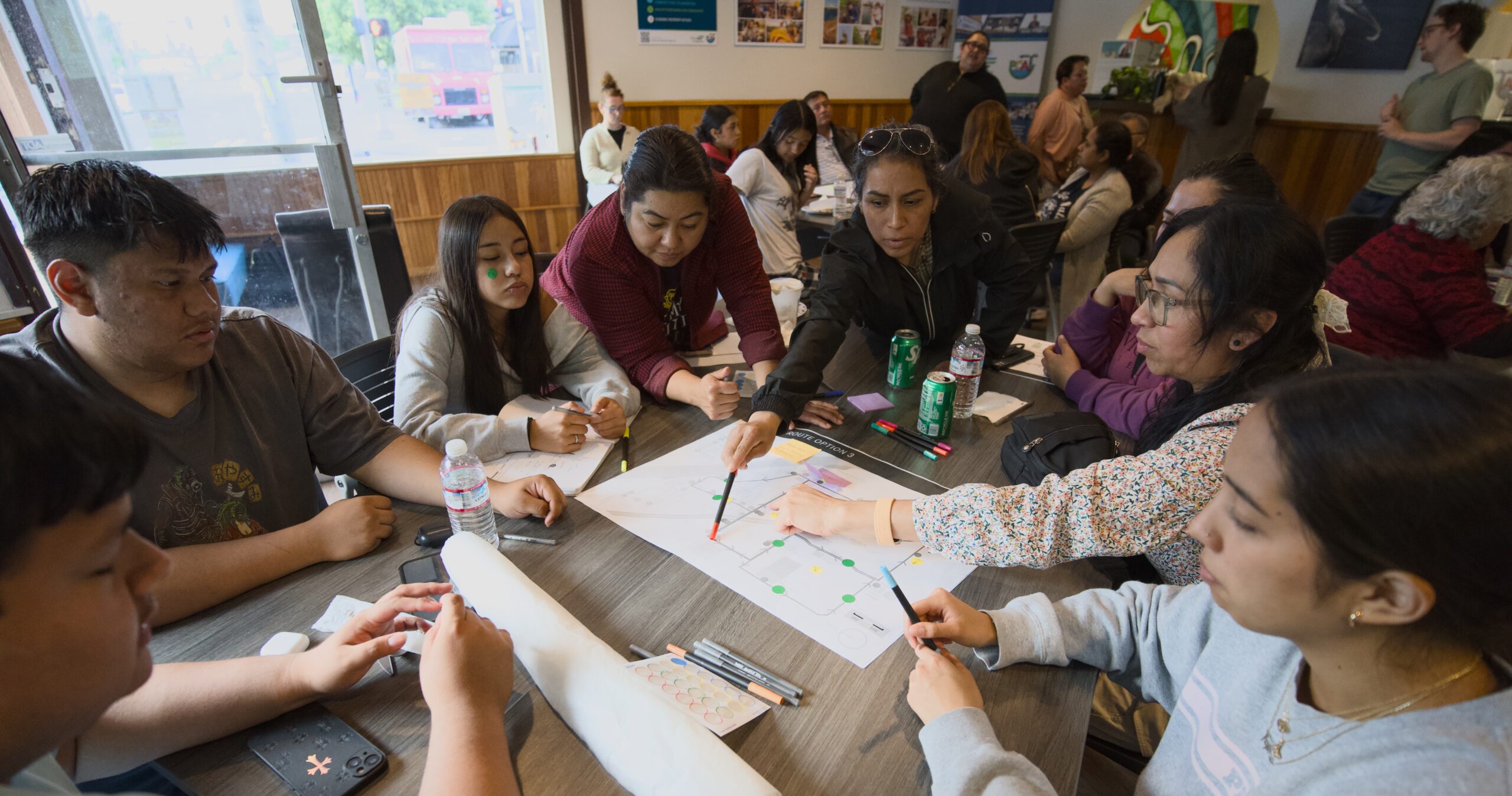
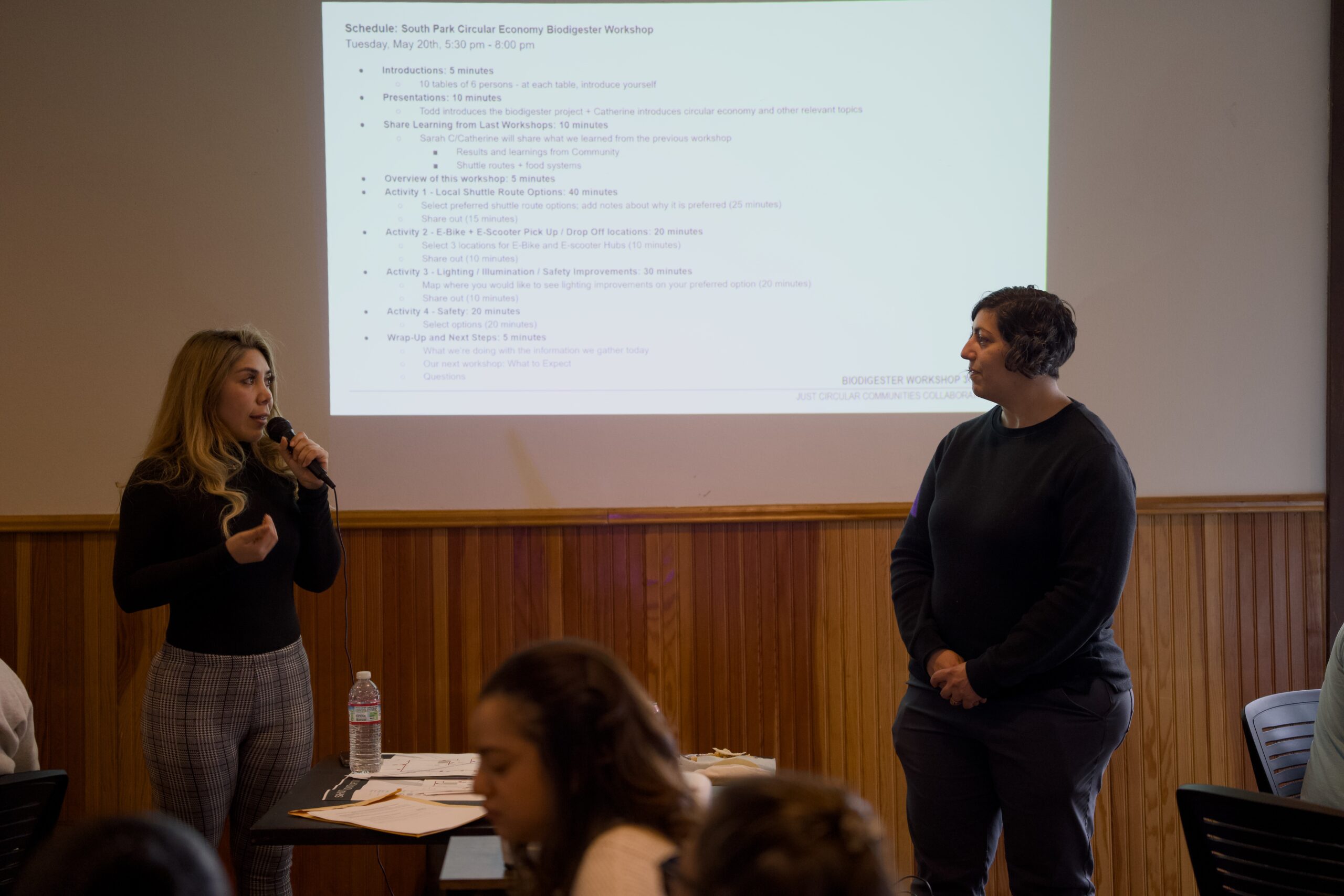
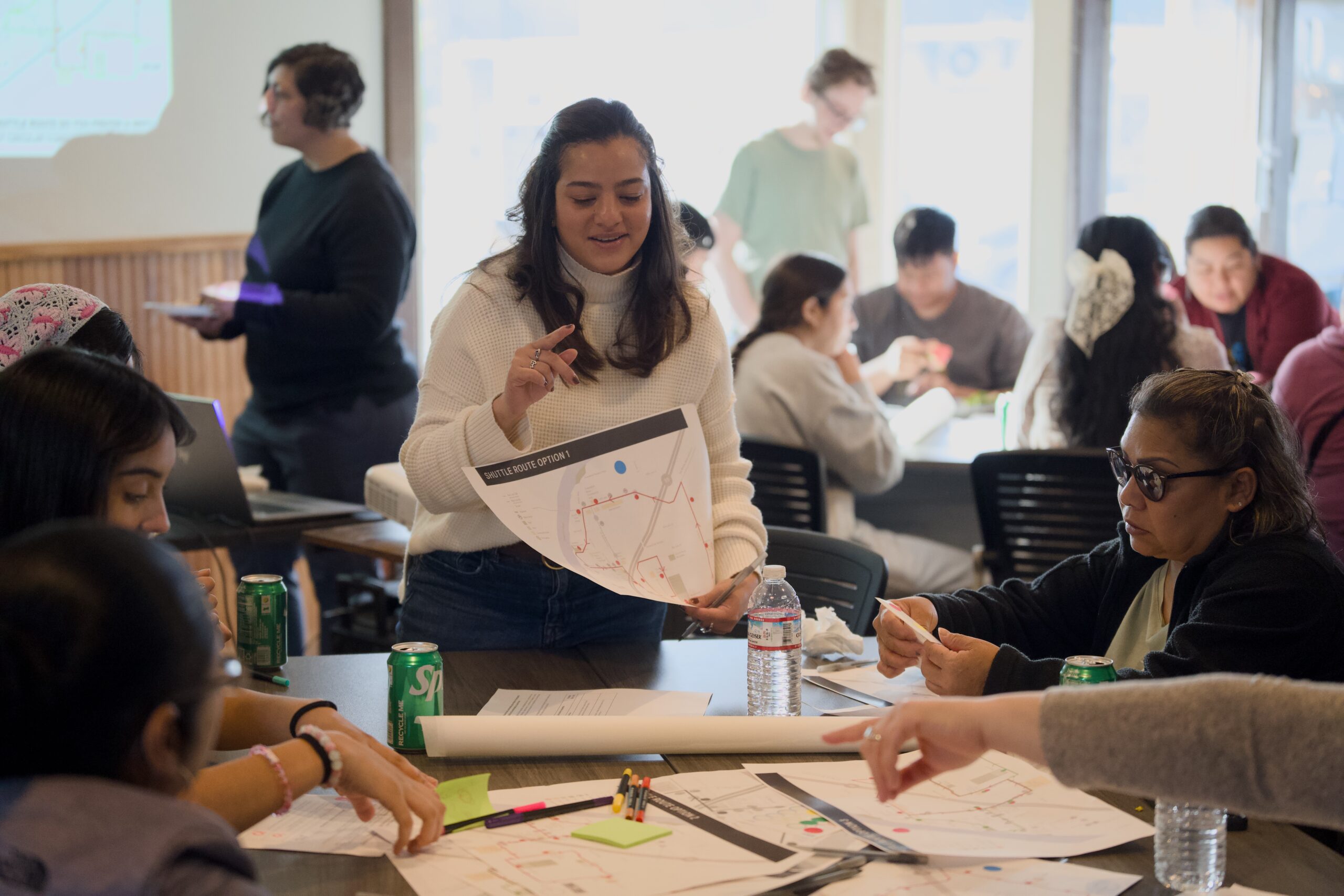
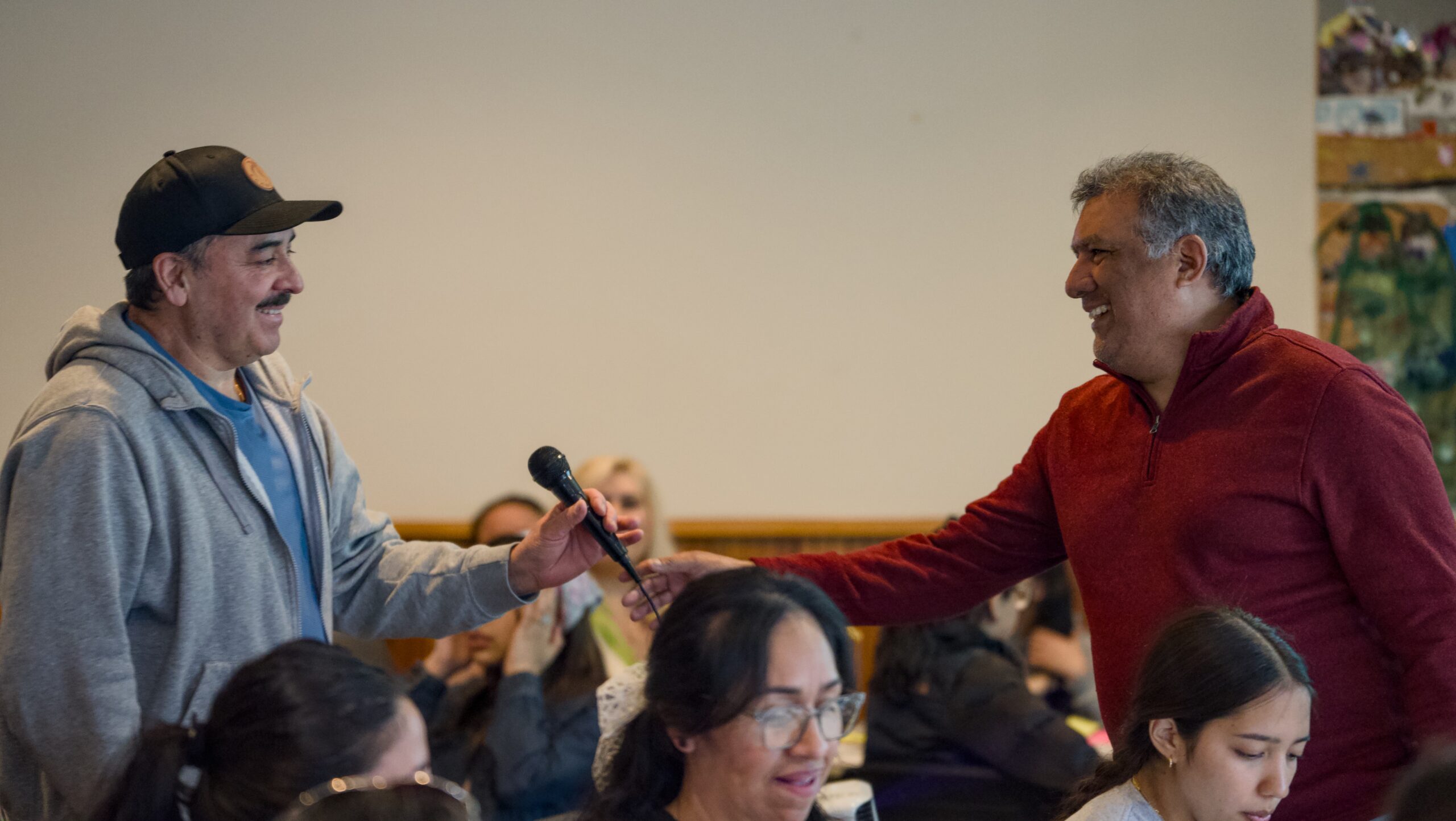
Through four community workshops and ongoing conversations with residents, the team explored how a biodigester could strengthen a circular economy in South Park. They used the Chomp Core 1500 as a prototype model, capable of processing about 1,500 tons of food waste each year. The system produces two outputs: biogas for renewable energy and digestate (probiotic plant food) that can enrich soil and support local agriculture.
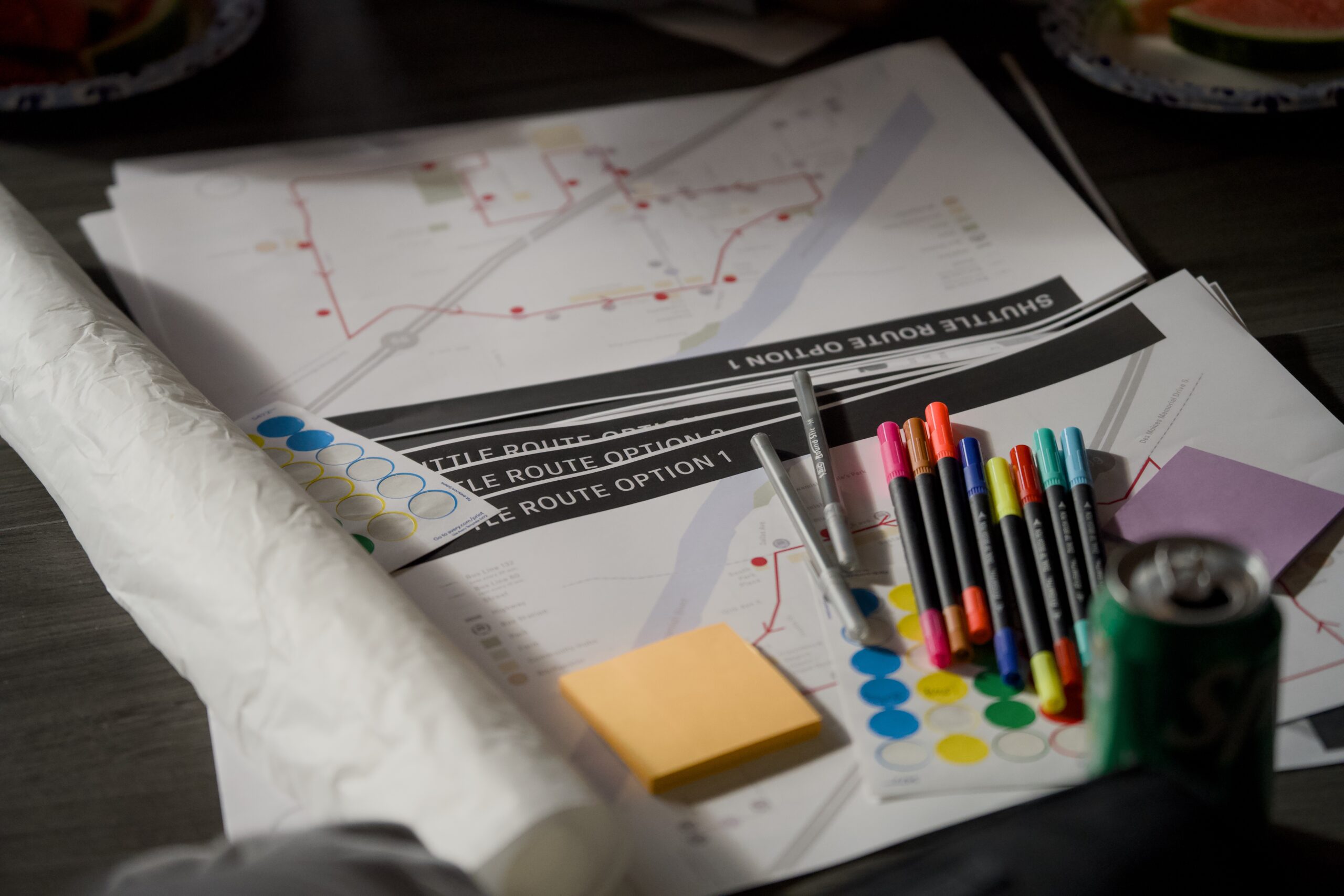
Their findings showed strong interest in bringing a biodigester to South Park. It could reduce food waste, lower emissions, support local farming, and create green jobs. Some residents even suggested using the biogas to power electric bikes or shuttles to improve transportation.
“We asked community members at the last workshop what they gained from this process. The responses were just so fantastic,” says De Almeida. “It ranged from, ‘It’s been great to get to know my neighbors,’ to, ‘Learning about the biodigester,’ to, ‘Getting excited about how the biodigester can support micromobility infrastructure.'”
Photos courtesy of Vision 7 Advertising.
Photos courtesy of Vision 7 Advertising.
Photos courtesy of Vision 7 Advertising.
Photos courtesy of Vision 7 Advertising.
Photos courtesy of Vision 7 Advertising.
Photos courtesy of Vision 7 Advertising.
Photos courtesy of Vision 7 Advertising.
While the biodigester has not yet been built, the feasibility study created momentum for next steps. These include identifying a site, building partnerships and securing funding. Challenges such as permitting, odor control and long-term operations still need to be addressed.
De Almeida reflects on the broader value of the work: “It’s always really rewarding when the things I’m talking about theoretically can actually be applied in practice. I always feel like it’s community organizations that are doing innovative work.”
The project demonstrates how neighborhood-scale infrastructure can advance equity and climate resilience. “It’s a pilot, it’s a prototype, and it can really demonstrate how our centralized and large-scale infrastructures are actually not working for us,” she says. “These kinds of regenerative economies need to happen at that smaller scale and at that neighborhood scale and would drastically change the way that we see the built environment.”
Read more about Just Circular Communities and their research in the Duwamish Valley.