
Posted on October 26, 2026
Post categories: Architecture Climate Featured Honors & Awards News
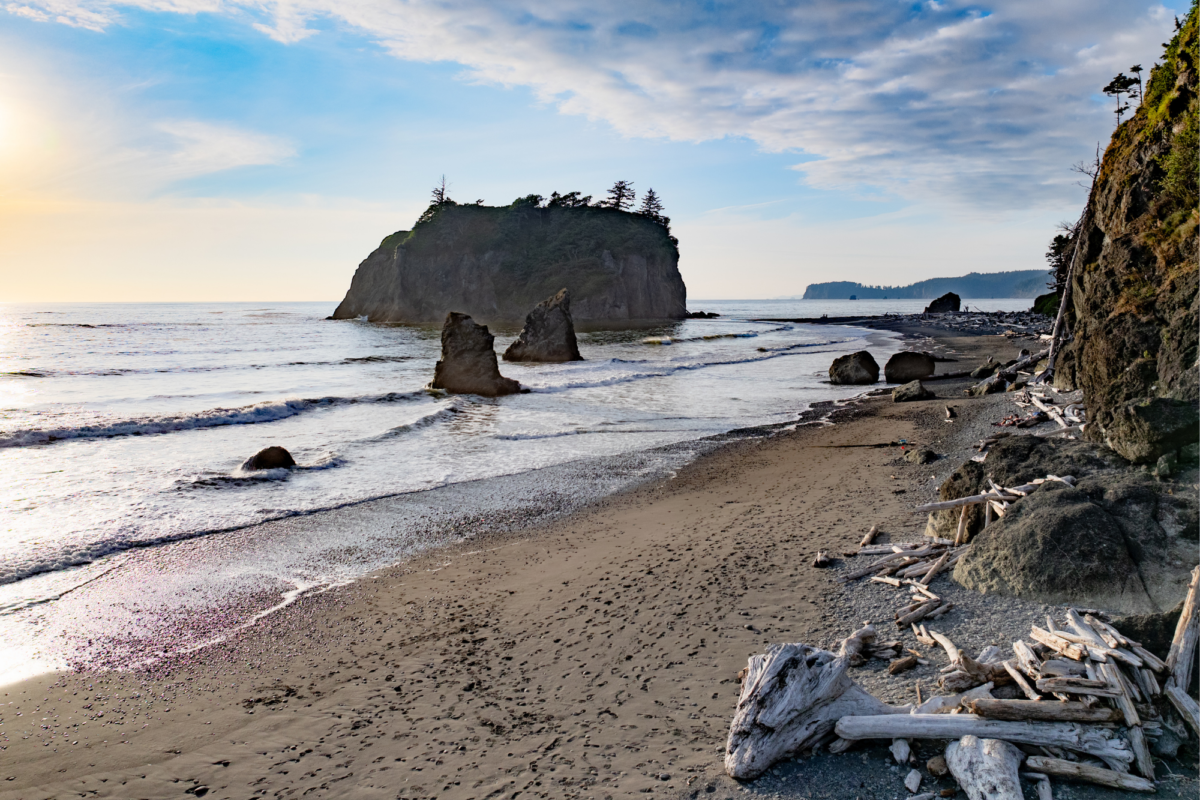
Climate change threatens Indigenous ways of life, but many communities are adapting.
The Coast Salish peoples have stewarded the Pacific Northwest coastlines and adjacent lands for over 10,000 years. However, rising sea levels are threatening these ancestral settlements.
Coastal communities face particular adversity related to climate change—such as increased flooding, erosion, altered weather patterns and disrupted ecosystems. As unprecedented climate-distasters grow in frequency, architectural and housing innovation plays a key role for resilience.
To adapt to these rising challenges, members of the Coast Salish community are teaming up with built environments researchers in a new studio through the Department of Architecture to design a prototype for housing that can be assembled, disassembled, and reassembled upland into new villages away from these threats.
The MOVING house Studio and Research Seminar is a proposed, award-winning, two-course sequence led by Associate Professor Rob Corser, AIA and Affiliate Lecturer Julie Kriegh, Ph.D., AIA grounded in traditional ecological knowledge (TEK) and practice and over three years of investigative research on cultural, architectural, planning and landscape aspects of the Tribal relocation process.
In the course, UW students, Coast Salish Tribal members, researchers and industry partners will work together to develop and test new models for structures that are movable, self-determined, replicable and climate-resilient and can be adapted by other communities for various challenges and purposes.
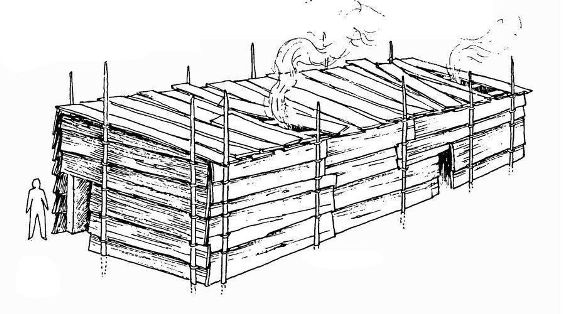
For millennia, Coast Salish peoples built plank houses with heavy timber frames and cedar panels. Traditionally, they moved from the coastline in the summer, taking planks that covered the frames of some of the winter houses to construct portable structures. These methods have become an important inspiration for new climate-resilient architecture designed for relocation.
In 2022, Corser and Kriegh served as partners on an interdisciplinary research project, Coastal Adaptations with the Shoalwater Bay Tribe, an Earthlab Initiative that sought to collaboratively develop a model for climate-adaptive, culture-affirming and change-mitigating environmental strategies when creating infrastructure, housing and open spaces for relocation.
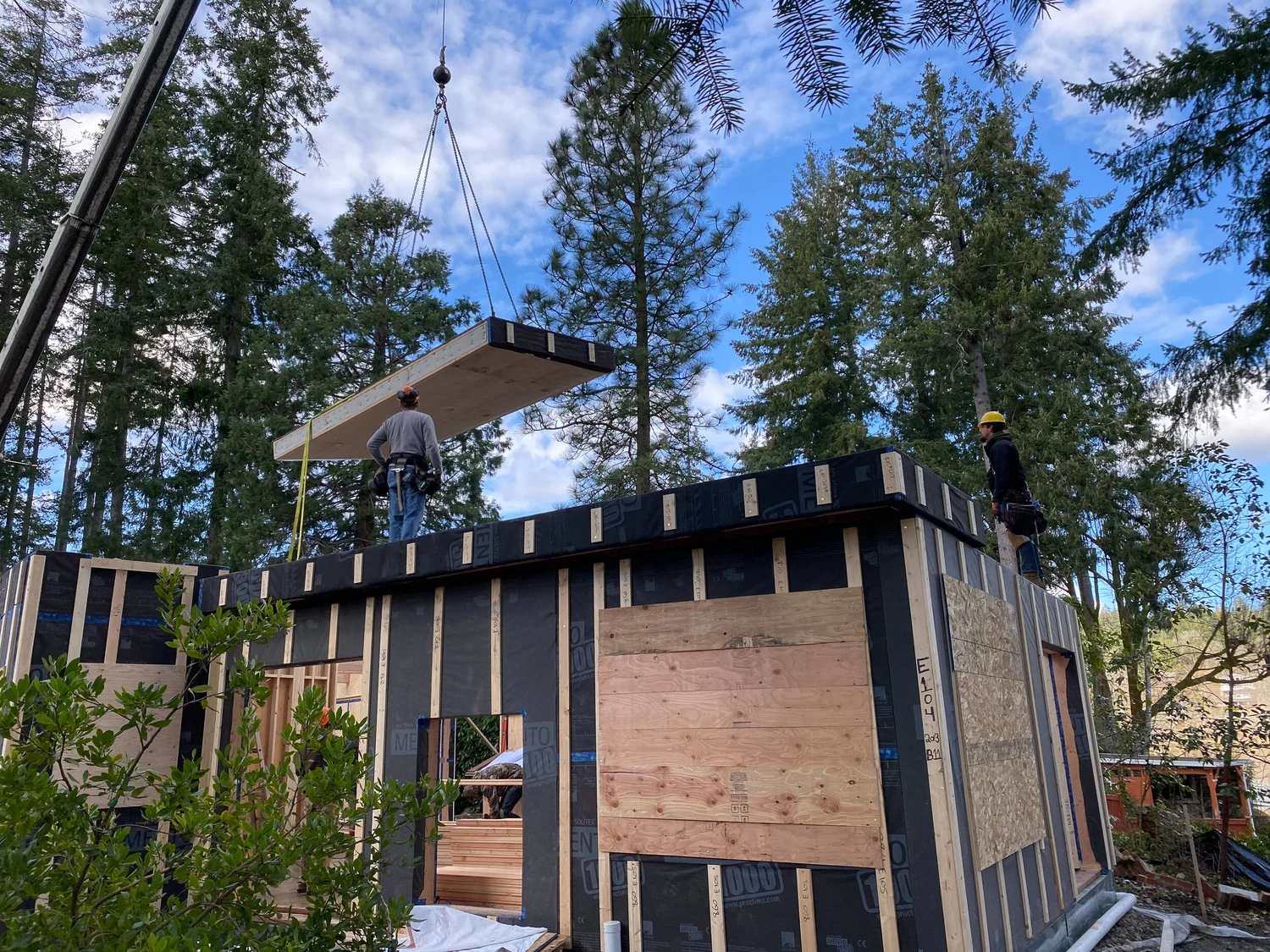
One key strategy identified by Kriegh was the potential use of Passive House principles as a method for creating efficient, durable, healthy, and resilient movable housing.
“A Passive House structure is made from low carbon materials and pre-built panel systems that are later assembled onsite,” explains Kriegh. “They are designed to create a super insulated, virtually air-tight building that is primarily heated by passive solar energy and by energy emission from the people and equipment inside the structure.”
The challenge Corser and Kriegh hope to solve is how to make Passive House structures that can be relocated elsewhere after its initial construction as climate change needs or real-estate opportunities arise.
“While off-site construction and factory-built panel systems are becoming a more widespread practice and are often used for Passive House projects, those site-assembled structures aren’t typically designed to be disassembled and re-built in a new location,” says Corser.
Following their initial work through the Earthlab Initiative, Corser and Kriegh paired up to investigate housing designs, materials and Passive House strategies through several graduate research seminars and studios.
“Teaming up with Rob Corser and his long-standing research on transitional affordable housing was a collaboration made to order,” says Kriegh. “Reaching out to Rob, he immediately reached back as our work has many overlapping ideas and ideals.”
They continued to partner with the Shoalwater Bay Tribe in spring to design and develop planning strategies that draw on culturally-based place meanings and attachments that support a sense of continuity, ease the transition, and create new possibilities for re-grounding. In a separate studio, Corser worked with partners LIHI and Sound Foundations NW’s Hope Factory on flat-pack fabrication prototypes for homes intended to serve unhoused neighbors in Tiny House Villages. Through her firm, Kriegh Architecture Studios, Kriegh has worked with many prefabricated panelized construction companies to design and build sustainable housing.
Altogether, the ideas and methods uncovered during these opportunities have become foundational to the new course.
Through the MOVING house Studio and Research Seminar, the team will work with the Coast Salish to develop a non-specific prototype housing structure made from panelized prefabricated materials Designed for Disassembly (DfD) and relocation. A key goal is to develop production workflows that Tribal members can participate in and replicate themselves.
During the first phase of the MOVING house in spring 2027, students, instructors and Tribal members will collaborate to better understand the needs for a climate-adaptive housing design that can be moved away from climate-hazard areas.
Once identified, they will conduct component investigations, reviewing what local materials are available from Tribal forests, while also working with BPublic Passive House Prefab Company, a commercial panel manufacturer in the region that specializes in Passive House fabrication.
“BPublic will not only partner with us to instruct our students but also lead workshops for architects, construction management, and contractors,” explains Kriegh.
Another important focus is improving how energy-efficient building materials are prefabricated, assembled and designed for future disassembly and reuse. They will work closely with local engineers such as Swenson Say Faget Engineers to design an innovative system that can be efficiently erected, taken apart, and reassembled.
For the spring and summer portions of the course, university students and Tribal youth will work together to conduct a design-build test of a modest structure built with the resulting techniques, as a full-scale demonstration. This will verify new methods that can assure viable relocation.
“This studio will expose students to a number of important topics that aren’t often part of our curriculum,” explains Corser. “This includes but is not limited to: collaboration skills while working with Indigenous community partners, design methods for climate-driven dislocation and adaptation, Passive House standards and certification, off-site construction and workforce development, and how to utilize local materials for DfD structures.”
The American Institute of Architects (AIA), Housing and Community Development (HCD) Knowledge Community and the Association of Collegiate Schools of Architecture (ACSA) recognized Corser and Kriegh for MOVING house with the 2026 Housing Education Prize, which awards exceptional housing design education proposals that prepare architects to be impactful leaders in their fields.
Corser and Kriegh hope that the prototype developed during the proposed course ‘goes on the road’, where it can be assembled and disassembled as a model at various Tribal locations as well other sites and university settings. By creating an open source and adaptable model for DfD structures, this studio strives to help a wide range of communities find solutions that face pressing challenges related to climate change, housing issues and beyond.
“At its core, this studio is a research-based technical investigation of truly high-performance, adaptable and culturally resonant housing that can find multiple applications for any community responding to climate change,” says Corser. “We are actively seeking participation and potential funding partners to engage with this important effort.”
Ultimately, the MOVING house Studio and Research Seminar will be a collaborative effort that advances self-determination through the creation of adaptable, movable, sustainable and culturally-grounded housing, demonstrating how architecture can be an important tool for climate-resilience and adaptation.
Read more about the MOVING house Studio.
The University of Washington acknowledges the Coast Salish peoples of this land, the land which touches the shared waters of all tribes and bands within the Suquamish, Tulalip and Muckleshoot nations.