
At the College of Built Environments (CBE), your mental wellbeing is our top priority. We offer resources to help you navigate academic and life challenges. Evalynn Fae Taganna Romano, MPH, MSW, LICSW is CBE’s embedded mental health counselor from the UW Counseling Center.
Evalynn is situated in Gould Hall (448E) and offers the following free, confidential* services to the CBE community:
- “Let’s Talk”: Brief, informal meetings that may involve topics like anxiety, stress, relationships, worry, sadness, family problems, and overwhelm. Let’s Talk is not therapy but can be a step towards therapy or other mental health resources.
- Access to short-term therapy
- Mental health resources and referrals
- De-stress events throughout the year
- Consultation for faculty and staff on supporting student mental health
*Conversations are confidential except for specific limitations around mandated reporting and safety.
Evalynn is available for in-person and virtual appointments Monday through Thursday.
If you are unable to find a day and time that works with your schedule via her booking link below, please email Evalynn directly for scheduling at evalynn@uw.edu.
About Evalynn
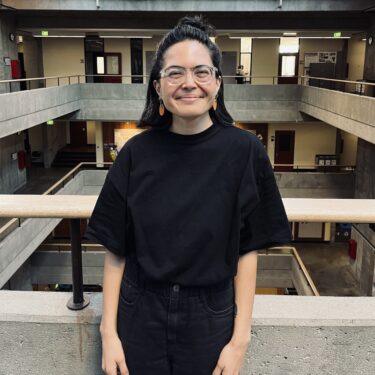 Evalynn was born and raised in Seattle and has deep roots at UW: UW alum (BA in Psychology; MPH & MSW), proud daughter of UW custodians, and UW employee in healthcare and research. Evalynn comes from a family of immigrants and is a first-generation college graduate. She has experience in different languages and cultures including Tagalog, Waray-Waray, and Khmer/Cambodian. Evalynn enjoys arts and crafts, coffee and tea, fresh air, community organizing, yoga, and climbing.
Additional Resources
24/7 SUPPORT
Husky HelplineCall (206) 616-7777
(if calling from outside the US or Canada, dial 001-416-380-6578)
Crisis Text LineText HOME to 741741; Chat option available on website
(Text HOLA for Spanish)
Trans LifelineCall (877) 565-8860
988 Suicide & Crisis LifelineCall or text 988; Chat option available on website
Frequently Asked Questions
Q: What is “Let’s Talk”?
A: Free, brief, informal meetings with a mental health counselor in CBE (Evalynn) or at the UW Counseling Center (UWCC), if you prefer to meet with a counselor outside of CBE. Let’s Talk may involve but is not limited to:
- Talking about stress and anxiety related to academics, relationships, etc.
- Learning about healthy ways to cope with stress and other concerns
- Getting emotional support and identifying ways to increase social connection
- Learning about mental health resources on and off campus
Let’s Talk is not therapy but may be used as a step towards therapy or other mental health resources, if interested. Let’s Talk is not for urgent concerns.
Q: What should I do for urgent concerns?
A: If you or someone you know is in immediate danger, you can call 911. If in crisis or in need of immediate support, you can call the UWCC at (206) 543-1240, Husky Helpline at (206) 616-7777, or call/text 988 for the 988 Suicide & Crisis Lifeline. Husky Assist is a new UW mobile response team that provides on-site behavioral health support for students, faculty, and staff in crisis on the UW Seattle campus and can be reached by calling (206) 543-9331 or 911.
Q: Will my professor or adviser find out if I meet with Evalynn or a UWCC counselor?
A: No, unless you explicitly state that you want them to! Evalynn and the UWCC offer students a safe and confidential space to talk. As mental health clinicians, they follow HIPAA’s rules of confidentiality. No one will be informed if a student utilizes services or not. The content of your conversations will not be shared with anyone except in instances of physical harm to yourself or others.
Q: How much does it cost?
A: It’s free! If you choose to enroll in short-term therapy, the UWCC will bill your insurance. However, all copays or non-covered services are paid for by the Services & Activities Fee. If you don’t have insurance or prefer not to bill your insurance, services are still covered.
Q: What is it like to speak with a mental health counselor?
A: Some students have never met with a mental health counselor due to reasons that may include varying cultural understandings of mental health, limited access, feelings of shame or embarrassment, a belief that counseling is only for serious issues, or fear of the unknown. Here is generally what you can expect:
- You will get to know one another and talk about what is going on for you, how you are feeling, and what might make things better.
- You can bring any topic, and it does not have to be CBE related.
- You can explore any thoughts, feelings, and behaviors without judgment.
- Your discussions will stay confidential except for limitations including the imminent safety of yourself and others, and legal requirements due to court proceedings.
- You may experience feelings of discomfort as you discuss difficult situations and emotions.
- There is nothing “wrong with you” for speaking with a counselor. Perhaps you need someone to listen, support you through a challenging moment/situation, or help you find resources to enhance your wellbeing.
- You are always welcome to provide feedback to your counselor and ask questions about the process at any time.
Q: Can I work with a counselor who shares some of my identities?
A: Yes, you can go to any UWCC counselor for free (read counselor profiles here). There may be a waitlist depending on the counselor. Please reach out to the UWCC to inquire about meeting with a specific counselor by calling (206) 543-1240. You can look for a counselor outside of the UW here, however, this will either be billed to insurance or have an out-of-pocket cost. If you need support finding free mental health resources, feel free to reach out to Evalynn by scheduling time to meet.
Q: What is the best way to address an academic issue related to professors, staff, or peers?
A: If you would like to talk about your feelings related to the issue but not necessarily address the person directly, then talking to the mental health counselor may be the best route. If you would like to explore options to address or report grievances, then you may use the CBE Student Grievance Process.
Q: Can I reach out to Evalynn or the UWCC even if I already have a therapist?
A: It is wonderful that you are already connected to a therapist! This should be the person you turn to for support. However, if you are having issues with your therapeutic experience outside of the UW system, please feel free to discuss these concerns with Evalynn or a UWCC counselor.
How can Evalynn support CBE faculty and staff?
Evalynn is available for CBE faculty and staff to:
- Consult about students of concern
- Refer students by providing a warm handoff via email with student permission
- Learn about available mental health resources on and off campus
- Request her presence at various events including orientation and classes
Additional resources for faculty and staff are available on the UWCC’s website including the Supporting Students: Employee Guide.